
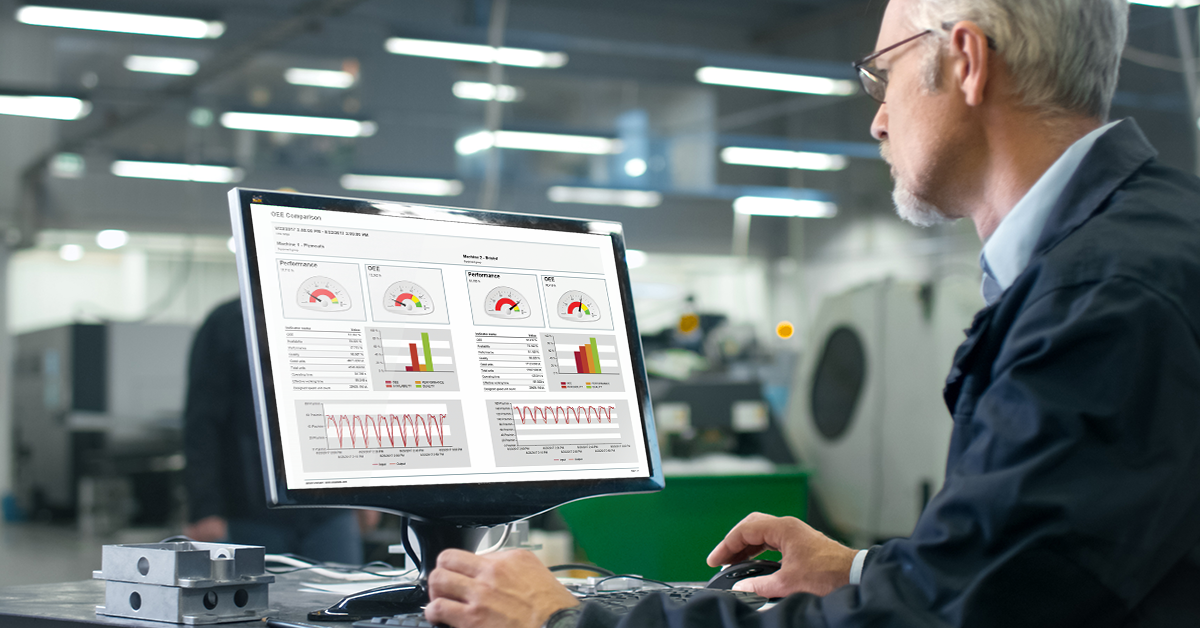
For many small and medium-sized enterprises, the transition to automation is often viewed as a mechanical upgrade-replacing a manual task with a robotic arm. However, the true value of Industry 4.0 lies not just in the movement of the robot, but in the data generated by that movement. Without visibility into how a robotic cell performs over a full shift, production managers are often left guessing why throughput targets weren’t met or why energy costs spiked unexpectedly.
The move toward digitized production management requires tools that bridge the gap between the physical shop floor and the analytical dashboard. This is where specialized monitoring and deployment platforms change the equation, turning “black box” automation into a transparent, tunable asset.
Beyond the Installation: The Need for Continuous Visibility
Once a robot is deployed, the focus typically shifts to maintenance and uptime. Traditional monitoring involves manual logs or basic error alerts that require a technician to stand physically at the controller to diagnose an issue. This reactive stance creates a “wait-and-see” culture that bleeds profitability through micro-stops and unoptimized cycle times.
By implementing a centralized platform like dploy, managers gain an immediate, high-level overview of their entire automated fleet. This shift from reactive to proactive management allows for the identification of bottlenecks before they result in a line stoppage. Whether a gripper is losing vacuum pressure or a motor is drawing more current than usual, the data provides a narrative of the machine’s health in real-time.
The Intuitive Dashboard: Bridging the IT-OT Gap
A significant barrier to smart factory adoption has been the perceived need for a dedicated IT department to manage the data. Most production managers don’t have the time to parse raw JSON files or write custom SQL queries to see their daily output.
Modern monitoring solutions prioritize “Sophisticated Clarity.” This means presenting complex robotic metrics-such as Overall Equipment Effectiveness (OEE), cycle counts, and availability-through a graphical interface that a floor supervisor can understand at a glance. When the dashboard is intuitive, decision-making becomes faster. If the data shows that a specific palletizing cell is consistently underperforming between 2:00 PM and 4:00 PM, management can investigate environmental factors or material supply issues that might otherwise have gone unnoticed.
Optimizing Motion for Energy and Throughput
Every millisecond of “air time”-the moment a robot moves without carrying a part-is a drain on efficiency. Similarly, every unnecessary acceleration consumes excess electricity and increases wear on the robot’s joints. Data-driven platforms allow engineers to analyze the robot’s motion paths with mathematical precision.
By visualizing the duty cycle, engineers can identify where paths can be smoothed or shortened. A robot that “feels” its way through a path more efficiently doesn’t just work faster; it works smarter. This optimization leads to a direct reduction in energy consumption per unit produced. In a high-volume environment, shaving half a second off a pick-and-place cycle can result in thousands of additional units produced over a month, significantly boosting the facility’s total profitability.
Remote Access and Rapid Response
In a traditional setup, an evening shift breakdown might mean production stops until a maintenance manager can travel to the site the following morning. The ability to access diagnostic data remotely changes this dynamic entirely.
With cloud-connected monitoring, an integrator or maintenance lead can log in from a mobile device to check error codes and sensor readings. Often, an issue-such as a misconfigured software parameter or a simple reset-can be handled remotely, saving hours of downtime. This level of connectivity ensures that the “Prudent Advisor” is always available, regardless of their physical location, providing a safety net that protects the production schedule.
Fact-Based Decision Making for Scalability
For owners of SMEs, the decision to invest in a second or third robot should not be based on a “gut feeling.” It should be based on the proven performance of the first unit. Real-time monitoring provides the hard evidence needed to justify further capital expenditure.
By analyzing the ROI of current cells through a platform like D:PLOY, stakeholders can see exactly how much they have saved in labor costs, how much they have reduced scrap, and how much capacity remains in their existing equipment. This transparency removes the risk from scaling, allowing for a steady, data-backed expansion into fully automated manufacturing.
The future of the factory floor is one where the machines tell you how to be more profitable. By embracing the data generated by every grip and every rotation, manufacturers can ensure their operations remain lean, resilient, and ready for the demands of a fluctuating global market.
