
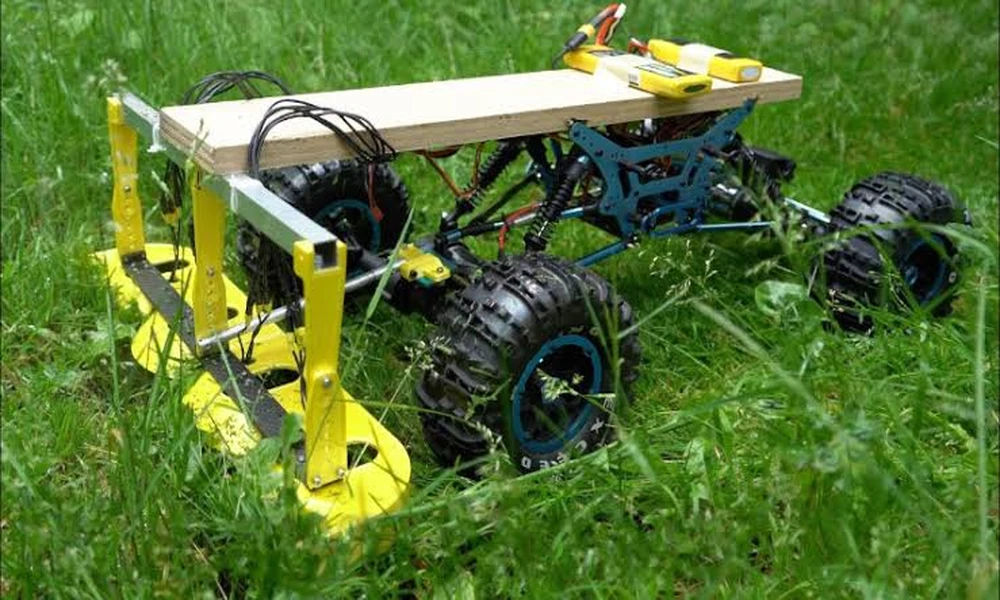
The remote-controlled mower market has expanded enough that the choice between models is no longer straightforward. Entry-level options sit alongside professional-grade machines at prices that vary by several hundred percent, and the specifications that matter most are not always the ones that get the most attention in product descriptions. Understanding what actually affects the real-world performance of an RC mower helps you make a decision you will not regret after the first few sessions.
This guide covers the specifications that matter, the features that are genuinely useful versus those that sound impressive but rarely make a practical difference, and the questions worth asking before committing to a purchase. Whether you are looking at your first RC mower or upgrading from a model that has not quite met your expectations, the principles here apply across the category.
Drive System and Traction
The drive system is the most important technical specification for an RC mower, and it is the one most commonly underweighted by first-time buyers who focus on cutting width or battery capacity instead. A mower with a weak or poorly designed drive system will struggle with any meaningful slope, lose traction in damp conditions, and require more operator input to maintain a straight line than a well-engineered alternative.
Four-wheel drive systems provide the best all-terrain capability. Two-wheel drive rear models work adequately on flat terrain but show their limitations quickly on slopes above a few degrees. For gardens with significant gradient variation, four-wheel drive is worth the premium. For genuinely flat terrain, two-wheel drive is often adequate and may offer a cost advantage worth taking.
Cutting Deck and Width
A wider cutting deck reduces the number of passes needed to cover a given area – which sounds straightforwardly good but comes with tradeoffs. Wider decks are heavier, which affects maneuverability on slopes and around obstacles. They are harder to fit through narrow gaps. And they require more motor power to drive effectively, which affects battery consumption and runtime.
For most residential lawns, a cutting width in the 16 to 22 inch range represents a practical balance. Larger properties benefit from wider decks, but the width should be matched to the actual terrain and the obstacles you regularly navigate. A remote control lawn mower that cannot get through your garden gate is solving the wrong problem.
Control Range and Signal
The published control range of an RC mower is the maximum distance under ideal conditions – open terrain with no interference. Real-world range in a garden with walls, fences, trees, and other signal-absorbing obstacles will be shorter. For most residential applications, a range of 100 to 150 metres in real conditions is more than adequate. For larger properties, verify that the control system maintains reliable connection at the distances you actually need.
Signal quality and response lag matter more than raw range. A mower that responds instantly and precisely at 50 metres is more useful than one that reaches 200 metres but has noticeable input lag. Input lag affects precision in tight manoeuvres and makes navigating around obstacles more frustrating.
Maintenance Requirements
Like any mowing equipment, an RC lawn mower requires regular maintenance to stay in good working order. Blade condition affects cut quality and motor load. Battery care affects longevity. Drive system components need periodic inspection. Before purchasing, check the availability of replacement parts and the accessibility of the components that need regular attention. A mower that is difficult to service independently and has expensive or hard-to-source parts creates ongoing costs that the purchase price does not reflect.
