
Author

Trinidad Grimshaw

Browsing

Fintech dashboards serve users who are monitoring positions, reviewing transaction data, and acting on time-sensitive information within a single session. Each of those tasks places specific demands on how the interface organises, presents, and responds to data. A user interface agency for fintech opens a dashboard redesign by identifying which of those demands the current interface meets and which it leaves unresolved. Prioritisation in a dashboard redesign is a sequencing decision. Hierarchy is addressed before layout. Density is calibrated before visual refinement. Interaction states are defined before component styling is finalised.

1. Hierarchy before visuals

Hierarchy in a fintech dashboard is not a layout preference. It is a map of what users need to see first, second, and on demand. Dashboard surfaces where critical account data, transaction status, and alert conditions compete for equal visual weight force users to scan rather than act. Resolving hierarchy means establishing a clear order of visual priority based on how users move through tasks during a session. Task sequence analysis determines which data points sit at the top level of the hierarchy and which are placed behind navigation. A redesign that sets this order correctly reduces the time between a user arriving at the dashboard and taking an informed action.

2. Density and precision

Density in a fintech dashboard is a direct product of how many data points each user role requires at one time. A dashboard carrying data for multiple user types on a single surface presents each of them with content they do not need alongside content they do. Calibrating density means mapping role-specific data requirements and structuring the surface so each user type encounters only what their tasks demand. Precision applies to how numerical data is displayed. In financial interfaces, figure alignment, decimal handling, and unit consistency are not formatting details. They are the conditions under which users read and act on data accurately.

3. State-driven interaction

State design in a fintech dashboard covers every condition the interface enters beyond its default loaded view. Loading sequences, error responses, empty data conditions, and confirmation feedback each represent a distinct interface state that users will encounter during regular use. Designing these states against the specific conditions that trigger them ensures users receive accurate feedback at every point in the session. Fintech users encountering an undesigned or inconsistent state during a transaction or position review do not distinguish between an interface problem and a data problem. A user interface agency for fintech resolves this by treating each state as a named design output with defined visual behaviour, not as a residual condition handled after primary screens are complete.

4. Component coherence

Component behaviour across a fintech dashboard determines how quickly users can build a working model of the interface. When filters, toggles, tables, and action elements behave consistently across every section of the dashboard, users learn the interface once and apply that understanding everywhere. When they behave differently, users carry uncertainty into every interaction.

Coherence is evaluated at the system level before individual components are finalised. Spacing, typographic weight, interactive states, and feedback patterns are assessed across the full dashboard surface rather than reviewed section by section. A user interface agency for fintech treats component coherence as a structural output of the redesign process, one that determines how confidently and accurately users engage with the dashboard across every session it is used.
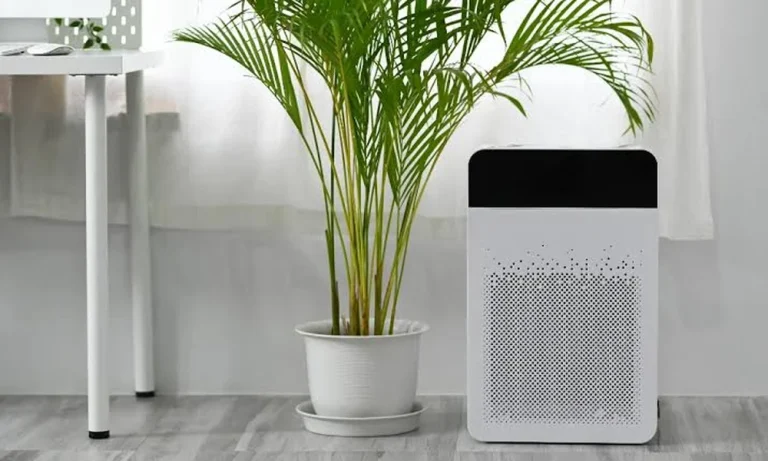
The Comparison Framework That Works

Comparing washable filter air purifiers across the market requires a framework that focuses on the specifications that vary meaningfully rather than on the ones that are similar across quality options. Most washable filter units in the current market use similar underlying technology – electrostatic precipitation – and achieve comparable fine particle capture efficiency when properly maintained. The meaningful differences are in CADR relative to room size, ozone output, noise level at low continuous speed, and the practicality of the cleaning process.

CADR is the most important performance specification for comparison purposes. A unit with a verified CADR of 300 cfm provides twice the air quality benefit of one with a CADR of 150 cfm in the same room. The AHAM certification process standardizes how CADR is measured, making comparisons between AHAM-certified products reliable in a way that coverage area comparisons are not.

Ozone output is the safety specification specific to electrostatic technology that has no equivalent in HEPA comparisons. Units producing ozone above 0.050 ppm – the EPA threshold – create a health concern that partially offsets the air quality benefit. California Air Resources Board certification confirms ozone output below this threshold; units without this certification have not had their ozone output independently verified.

Cleaning Process as a Differentiator

Washable filter air purifiers compared across the current market reveals significant variation in cleaning process design – a specification that rarely appears in formal comparison frameworks but substantially affects whether the economic advantage of no filter replacement actually materializes in practice. A unit requiring 30 minutes of complex disassembly for monthly cleaning will fall behind schedule more often than one requiring 10 minutes of straightforward plate removal and rinsing.

Plate design affects cleaning ease in ways that product photos do not convey. Plates with complex geometry – ridges, chambers, enclosed spaces – trap particulate that is difficult to dislodge with rinsing alone and may require a soft brush. Plates with simple flat surfaces rinse clean under running water without special tools. Watching cleaning demonstration videos for specific units before purchase is more informative than reading cleaning instructions.

EPA Indoor Air Quality guidance on air cleaner maintenance emphasizes that maintenance consistency is as important as initial specifications for sustained performance. Their recommendation to consider ease of maintenance as a selection criterion alongside filtration efficiency and CADR directly supports the cleaning process comparison as a meaningful differentiator.

Price as a Comparison Variable

Price variation in the washable filter category is substantial and does not correlate cleanly with performance. Some premium-priced units deliver CADR levels appropriate for large rooms with verified ozone output and excellent cleaning process design. Others deliver equivalent performance to mid-range units at twice the price, supported primarily by brand positioning rather than measurable performance advantages.

The total cost of ownership calculation makes price comparison more accurate for this category. A unit priced at $300 with no filter replacement costs $300 over five years plus electricity. A unit priced at $200 with an annual $80 filter replacement cost costs $600 over five years. The unit that appears cheaper may cost twice as much over the ownership period – understanding which type each candidate is, before comparing their sticker prices, is the correct sequence.

Value in this category is best measured as CADR per dollar of total five-year ownership cost, with adjustments for ozone certification status (uncertified units carry a health risk premium that reduces their value regardless of price) and cleaning process practicality (a unit that will not be maintained is worth less than its specifications suggest).

The detail sander market is crowded with options that look capable on a product page but disappoint in actual use. Insufficient motor power, vibration that causes hand fatigue within minutes, poor dust extraction that fills the workshop in seconds, and pad attachment systems that feel fragile under repeated abrasive changes — these are the frustrations that drive experienced woodworkers and DIYers to approach detail sander purchases with significant scepticism.

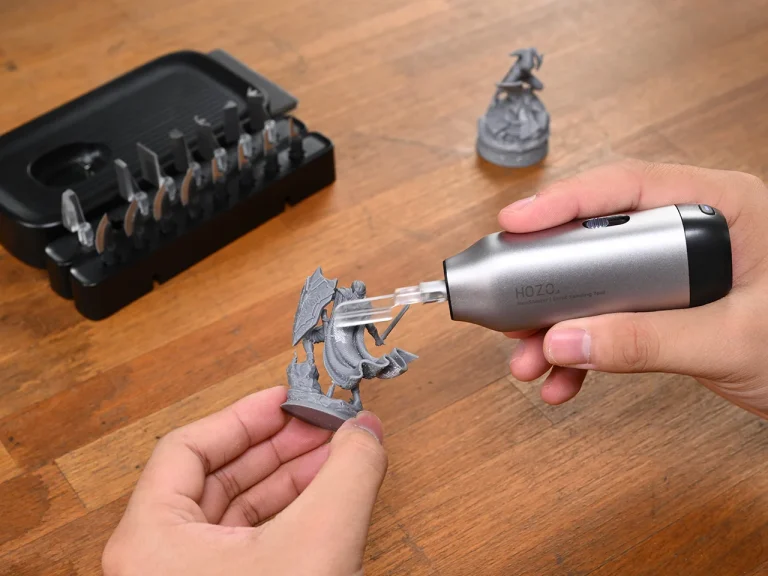
The HOZO NeoSander enters this category with a design that addresses the specific complaints most commonly raised about detail sanding tools. Understanding what sets it apart from the alternatives starts with understanding what actually matters in this tool category.

Motor Performance: The Foundation of Everything

A detail sander motor has to work harder per unit of pad surface than a large orbital sander, because the smaller pad concentrates the sanding action in a much smaller area. An underpowered motor bogs down under any meaningful sanding pressure, producing inconsistent results and extending the time needed to complete even straightforward tasks.

The NeoSander delivers consistent orbital action at a rate that handles both fine finishing work and the more demanding removal passes that prepare surfaces before final smoothing. The motor maintains its speed under load rather than slowing when the tool meets resistance — a distinction that becomes very apparent when working with denser hardwoods or through old finish layers.

Ergonomics and Extended Use Comfort

Detail sanding projects rarely involve a single quick pass. Restoring a set of chairs, finishing a cabinet with multiple moulded profiles, or working through the detailed joinery on a staircase installation can mean continuous detail sanding over extended sessions. A tool that causes hand fatigue within twenty minutes is not suitable for this work, regardless of its performance on shorter tasks.

The HOZO HoZo detail sander is balanced and sized for comfortable extended use. The grip positions naturally for both the overhand hold used for flat surface work and the side grip that works better when getting into tight corner sections. The vibration level is managed effectively — the tool produces the tactile feedback needed to understand what the abrasive is doing without the numbing vibration that characterises less well-engineered alternatives.

The Premium Combo System

The premium combo designation reflects the accessory set that accompanies the tool. Different sanding profiles — the standard triangle, narrower pointed profiles for getting into tighter sections, and finger-style extensions for the narrowest reaches — expand the tool’s effective range beyond what a standard single-pad tool can address.

This versatility is particularly valuable for complex restoration projects where a single workpiece might involve both broad flat sections that benefit from the standard triangular pad and deeply recessed carved or moulded areas that require a more aggressive profile to reach effectively.

Dust Extraction Performance

The dust extraction system on a detail sander matters more than on larger tools because the tight spaces where detail work happens tend to accumulate dust quickly, obscuring the surface and affecting visibility of the work progress. The NeoSander’s extraction ports are positioned to draw dust effectively during normal working operation, keeping the surface cleaner between passes and reducing the overall airborne dust in the work area.

For use in enclosed spaces or on materials where dust is a health concern, connection to an external dust extractor is straightforward. The extraction port accepts standard hose fittings, making integration with workshop dust collection systems simple to achieve.

Who This Tool Is For

The NeoSander Premium Combo suits woodworkers who do meaningful detail work regularly — furniture makers, restoration specialists, cabinetmakers, and serious DIYers who understand that the quality of the detail sanding is what ultimately determines whether a finishing project looks genuinely professional or merely acceptable. For occasional light use, a less capable tool might suffice. For anyone who spends real time on detail work, the performance difference makes the investment worthwhile.

Every early hire at an AI company is a bet placed under incomplete information, usually against a deadline you didn’t choose. Building 1Touch forced me to get good at that bet fast, because a wrong hire in a ten-person company isn’t a rounding error. It’s a quarter.

Credentials Tell You Almost Nothing About Adaptability

Early on, I leaned on pedigree – the right degree, the right previous company logo. It’s a poor predictor of what actually matters in a young company: can this person operate when the spec changes twice in a week.

Watch How Someone Handles Being Wrong in Public

The talent worth keeping treats a public mistake as data. The talent that isn’t worth keeping treats it as a threat to defend against. This single behavior predicted long-term performance better than any interview question I ever asked.

Curiosity Compounds Faster Than Raw Skill

James Deller actively selects for people who ask ‘why is it built this way’ before they ask ‘how do I fix it.’ That question separates people who will still be valuable in three years from people who are only valuable on today’s specific task list.

The Best Technical Talent Wants to Understand the Business

The strongest engineers were the ones most insistent on understanding unit economics, not just model accuracy. Commercial curiosity is a better predictor of future leadership than raw technical output.

Talent Spotting Is a Skill You Build

I didn’t walk into building 1Touch with a great eye for talent. I built that eye by getting hires wrong, tracing back what signal I missed, and adjusting what I screened for next time. The real lesson wasn’t about AI at all.