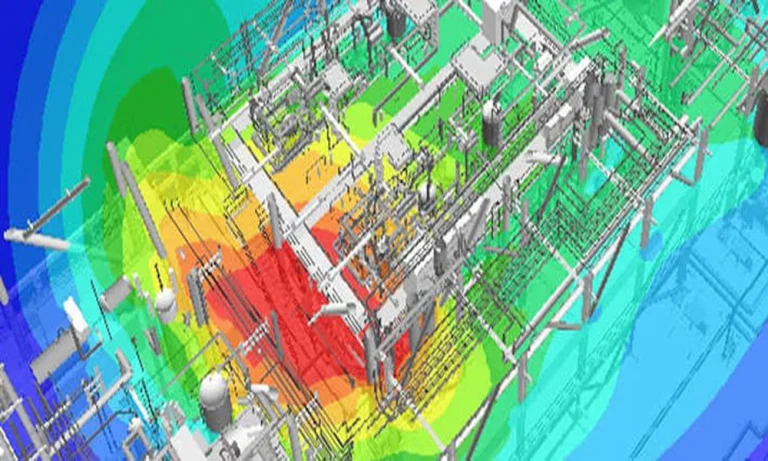
Why CFD Skills Matter in Engineering
Computational fluid dynamics has become an important part of modern engineering, helping professionals study fluid behavior, heat transfer, pressure distribution, and other physical processes through numerical simulation. Strong CFD skills allow engineers to move beyond theoretical knowledge and apply engineering principles to practical problems. Developing these capabilities can support more confident analysis, better interpretation of simulation results, and a more structured approach to technical work.
For engineers developing their knowledge, CFD courses can provide a structured path from fundamental concepts to practical simulation workflows. Learning in a progressive manner can help new practitioners understand how physical principles are represented computationally and how different stages of a simulation connect. This foundation is important when moving toward more detailed and demanding engineering projects.
Core Concepts Every New Learner Should Know
A solid understanding of fundamental principles provides the basis for effective CFD work. New learners should become familiar with concepts related to fluid mechanics, conservation of mass, momentum and energy, pressure, velocity, turbulence, and heat transfer. These principles help explain what a computational model is attempting to represent.
Learners should also understand important numerical concepts. Mesh generation, boundary conditions, solver settings, convergence, and result verification are essential parts of a simulation workflow. Understanding the purpose of each element makes it easier to identify potential issues and interpret results appropriately.
Developing Practical Simulation Skills
Practical experience helps transform theoretical knowledge into usable engineering skills. Engineers can begin with relatively straightforward simulation problems before progressing toward models with greater complexity. Preparing geometry, generating an appropriate mesh, defining material properties, establishing boundary conditions, and configuring solver parameters are valuable hands-on abilities.
Post-processing is equally important. Engineers need to examine simulation results carefully and determine whether the outputs are physically reasonable. Comparing results with theoretical expectations, experimental information, or established engineering references can help develop stronger analytical judgment.
Working With More Demanding Computational Projects
As engineers gain experience, they may encounter simulations involving larger computational domains, complex geometries, multiple physical effects, or demanding operating conditions. These projects require careful preparation because small modeling decisions can influence computational requirements and result quality.
Managing more demanding projects also involves understanding computational resources and workflow efficiency. Engineers should learn how to organize simulation files, monitor calculations, assess convergence, and identify unnecessary computational effort. These skills can become increasingly important as project complexity grows.
Continuing Technical Development Over Time
CFD knowledge develops through continuous learning and practical application. Engineering software, numerical methods, computational resources, and simulation techniques continue to evolve, making ongoing technical development valuable for professionals working in this field.
Engineers can strengthen their skills by reviewing new methods, studying advanced simulation topics, working on varied projects, and analyzing the results of previous studies. Documenting modeling decisions and lessons learned can also provide a useful reference for future work. Combining foundational knowledge with regular hands-on experience allows engineers to develop a deeper and more adaptable understanding of computational fluid dynamics over time.