
Author

Hull Folden

Browsing

Every organization reaches a point where the tools meant to drive efficiency start working against it. Marketing is pulling numbers from one platform, sales is working from a spreadsheet exported two weeks ago, and operations is referencing a dashboard that hasn’t been updated since last quarter. Nobody is technically wrong, but nobody is working from the same reality either. That disconnect is where collaboration goes to die.

What a Data Silo Actually Costs You

The cost of fragmented data isn’t always visible on a balance sheet, but it shows up everywhere else. Duplicate outreach to the same prospects. Conflicting reports presented in the same leadership meeting. Decisions made on incomplete information because the person with the right data wasn’t in the room.

Beyond the internal friction, siloed data slows down response times. When your customer service team can’t see what the sales team promised, or when your marketing automation is running off a list that hasn’t synced with your CRM in days, the gaps become customer-facing problems. That’s when data fragmentation stops being an internal inconvenience and starts affecting revenue.

For mid-market companies especially, this is a pressure point. You’ve scaled past the stage where everyone can keep things straight through conversation, but you may not yet have the infrastructure to tie your tools together in a meaningful way.

Why Silos Form in the First Place

Silos rarely start as a strategic choice. They emerge organically as teams adopt tools that solve immediate problems without considering how those tools will communicate with the rest of the business.

A sales team adopts a CRM. Marketing adds an email platform. Finance builds reporting in a spreadsheet. Customer success starts tracking tickets in a standalone helpdesk. Each decision made sense at the time, and each tool does its job reasonably well in isolation. The problem is that none of them were chosen with integration in mind.

Over time, each system becomes its own source of record for a particular team. Data gets entered in multiple places, definitions diverge, and reconciling reports becomes a project in itself. The moment someone asks a cross-functional question like “what’s the lifetime value of our enterprise customers?” it becomes clear that no single system can answer it.

What a Single Source of Truth Actually Looks Like

A single source of truth doesn’t mean a single tool that does everything. It means a unified data layer where information is entered once, governed consistently, and accessible across the systems your teams already use.

In practice, this might look like a central CRM that syncs with your marketing platform, your billing software, your support ticketing system, and your analytics tools. When a deal closes in sales, it should automatically update the customer record that customer success sees. When a campaign generates leads, those leads should flow directly into the pipeline without manual imports.

The goal is to eliminate the lag between what happened and what your teams know happened. Real-time visibility changes how decisions get made, and it changes how fast they get made.

Getting Buy-In Across Teams

One of the more underestimated challenges in building a unified data environment is the human side. People are attached to their tools and their processes. A team that has built its workflow around a particular spreadsheet or platform isn’t going to abandon it without a compelling reason.

The most effective approach is to lead with outcomes, not technology. Show the sales team how unified data shortens their research time before a call. Show marketing how cleaner attribution leads to better campaign decisions. Show leadership how consistent reporting removes the “which numbers are right?” debate from every quarterly review.

Training is not optional here. Rolling out a new system or integration layer without adequate onboarding is one of the fastest ways to ensure adoption fails. Teams need to see the benefit in their day-to-day work, not just in a slide deck presented at launch.

Building for Scale, Not Just Today

The decisions you make about data infrastructure today will either constrain or accelerate you a few years from now. A patchwork of disconnected tools might get you through the current quarter, but it creates compounding technical debt as your organization grows and your data volume increases.

Building toward a single source of truth is an investment in organizational clarity. It means fewer meetings spent debating whose numbers are correct, faster onboarding for new hires who need to understand the business, and better cross-team collaboration because everyone is finally looking at the same picture.

The companies that grow efficiently aren’t necessarily the ones with the most data. They’re the ones who know how to use it.
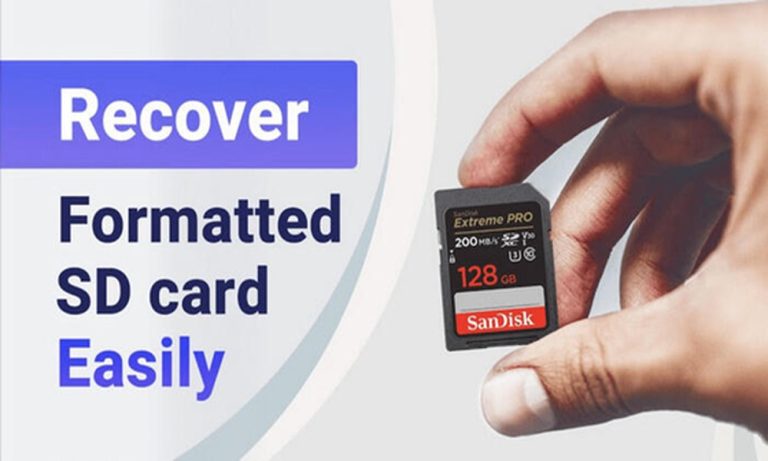

An accidentally formatted SD card can lead to the loss of valuable data, including documents, videos, and photos. You might have used the card for your mobile, PC, or camera. However, there is a risk of losing data at any time. Innovative software allows you to recover the lost files from your SD card. But, how long does it take to retrieve important files from the card?

Average time for SD card recovery

It may take a few minutes or even hours to recover data from formatted SD card. The exact recovery period depends on the chosen software and the storage device’s size.

For instance, recovering a small SD card takes around 5 minutes to half an hour. On the contrary, it takes almost an hour in case of medium-sized SD cards’ data recovery.

Large SD card users need to wait more than an hour to retrieve the data.

These average timelines include both the processes- scanning the card and restoring the files.

Which factors affect the recovery period?

A range of factors affect how long it takes to recover your data from the formatted SD card.

The card’s size

Larger cards hold more sectors, which are scanned before recovery. A 256GB card will take longer to scan than a smaller (16GB) card.

Recoverable data

If the card holds several videos and images, the recovery tool needs more time to restore each file.

The type of the scanning process

Many recovery applications allow you to choose from various scanning methods.

A quick scan offers a faster solution, but detects only a couple of files.

A deep scan process involves a thorough analysis and takes a longer time.

Your card reader’s speed

Your computer’s performance and the card reader’s quality affect the overall recovery period. Faster hardware means a reduction in the scanning time.

Conclusion

Recovering data from your formatted SD card is now easy with well-designed software. PandaOfficeDrecov is an SD card data recovery software with a range of user-friendly features. Make sure you have backed up files for an easier recovery.

Analytics has moved beyond dashboards and performance reporting. Today, analytical projects can influence hiring decisions, credit approvals, healthcare prioritisation, policing patterns, and personalised marketing. When models and data pipelines shape real outcomes, the risk is not just technical failure-it is social harm. This is where Data Ethics Review Boards (DERBs) become practical. A DERB is a cross-functional committee that reviews analytical initiatives for fairness, privacy, accountability, and broader social impact. For learners building foundational governance knowledge through a data analysis course in Pune, understanding how these boards work is increasingly relevant in modern organisations.

Why analytical projects need ethical governance

Many data risks do not show up as “bugs.” A model can be accurate on average and still disadvantage a particular group. A dataset can be legally collected and still violate expectations of consent. A metric can optimise business performance while encouraging harmful behaviour. These problems are often caused by blind spots during design and deployment.

Common ethical risk areas include:

  • Bias and discrimination: Skewed training data or proxy variables can unfairly affect protected or vulnerable groups.
  • Privacy and misuse: Data collected for one purpose can be repurposed without user awareness.
  • Opacity and accountability: Complex models can make decisions difficult to explain, audit, or challenge.
  • Harmful incentives: Optimising a single KPI can encourage manipulative nudges or exclusionary targeting.
  • Security and exposure: Sensitive attributes can be inferred even when not explicitly collected.

A Data Ethics Review Board exists to identify and reduce these risks before they become incidents, public backlash, or regulatory action.

What a Data Ethics Review Board does in practice

A DERB should not be a symbolic committee that meets occasionally. It needs clear authority, a defined process, and a practical scope. The board’s role is to evaluate analytical projects at key checkpoints and ensure they follow ethical and compliance standards.

Typical responsibilities include:

Project intake and classification

Not every analysis needs full review. A board usually defines risk tiers. For instance, a churn dashboard may be low risk, while a credit scoring model is high risk. Tiering prevents bureaucracy while focusing effort where the stakes are high.

Review of data sources and consent

The board checks whether data collection aligns with user expectations, contracts, and legal requirements. It also evaluates minimisation: are you collecting only what you need?

Fairness and impact assessment

The board reviews whether the model or analysis could create disparate impact. It asks how decisions affect different segments, including those that may be underrepresented in the data.

Governance decisions and guardrails

A DERB can approve, request changes, impose constraints (such as excluding certain variables), require human oversight, or reject a project if the risk is unjustified.

These practices align with what many professionals expect from a data analyst course, where ethics is treated as part of responsible analytics rather than a separate topic.

How to structure the committee for effectiveness

An ethics board works best when it represents multiple perspectives. If it is dominated by only technical stakeholders, it may miss social or legal implications. If it is entirely non-technical, it may impose unrealistic constraints. A balanced structure usually includes:

  • Data/Analytics lead: understands modelling choices, limitations, and validation
  • Product or business owner: explains goals, user journey, and expected outcomes
  • Legal/compliance representative: ensures regulatory alignment and documentation discipline
  • Security/privacy specialist: assesses data handling, retention, access, and leakage risk
  • Domain expert: provides context about the real-world system the model influences
  • Independent voice: someone empowered to challenge assumptions without penalty

The board also needs defined decision rights. If the committee only “advises” with no enforcement, teams will treat it as optional. A clear policy that high-risk projects must pass review is essential.

A simple review workflow that teams will actually use

The best ethics governance is operationally lightweight but consistent. A workable workflow often looks like this:

1) Ethics checklist at project proposal

Teams submit a short form covering purpose, data sources, sensitive attributes, user impact, and deployment plan.

2) Risk tier assignment

Low-risk projects get quick approval. Medium to high-risk projects go to full review.

3) Impact and fairness assessment

Teams provide segment-level performance metrics, error distribution, and evidence of bias testing where applicable. For non-model projects (like segmentation or targeting), the board evaluates potential harm and misuse.

4) Decision and conditions

The board approves, requests modifications, or requires monitoring. Conditions might include explainability requirements, human-in-the-loop controls, opt-out mechanisms, or restrictions on downstream usage.

5) Post-deployment monitoring

Ethical risk can change after launch due to data drift, policy changes, or shifting user behaviour. Monitoring plans should include bias drift checks and incident escalation paths.

This workflow should be documented and repeatable, so it becomes part of standard analytics delivery.

Key questions the board should consistently ask

To keep reviews objective, boards should rely on a set of standard questions:

  • What is the decision or outcome this project influences?
  • Who benefits, and who could be harmed?
  • Are there vulnerable populations involved, directly or indirectly?
  • Is consent meaningful for the intended use, or just implied?
  • Could a proxy feature introduce hidden discrimination?
  • What happens when the model is wrong, and how often will that happen?
  • Can users contest, appeal, or opt out of the decision?
  • What monitoring will detect drift, bias changes, or unexpected misuse?

When these questions become routine, teams start designing projects with ethical safeguards from the beginning.

Conclusion

Data Ethics Review Boards help organisations treat social impact as an operational responsibility, not a last-minute concern. By defining risk tiers, creating a balanced committee, using a clear review workflow, and enforcing monitoring, companies can reduce bias, privacy risks, and unintended harm without slowing innovation. For professionals upskilling through a data analysis course in Pune or a data analyst course, understanding how ethical governance works is now part of delivering analytics that is not only effective, but also trustworthy and accountable.

Business Name: ExcelR – Data Science, Data Analytics Course Training in Pune

Address: 101 A ,1st Floor, Siddh Icon, Baner Rd, opposite Lane To Royal Enfield Showroom, beside Asian Box Restaurant, Baner, Pune, Maharashtra 411045

Phone Number: 098809 13504

Email Id: enquiry@excelr.com

As AI interviewers become a standard part of modern hiring, recruiters are increasingly responsible for reviewing AI-generated interview outputs. These outputs typically include competency scores, structured summaries, response transcripts, flags, and hiring recommendations. The effectiveness of AI-assisted hiring depends not on the AI alone, but on how recruiters interpret and apply these insights. Reviewing AI interview outputs properly requires a structured, critical approach that balances automation with human judgment.

The first step in reviewing AI interview outputs is understanding what the system is actually measuring. Recruiters must be familiar with the competency framework used by the AI interviewer. Each score or label is tied to defined job-related criteria such as problem-solving, communication, technical depth, or decision-making. Reviewing outputs without understanding these definitions leads to misinterpretation. Recruiters should always anchor their review in the role requirements rather than treating scores as absolute judgments.

Recruiters should begin with the overall interview summary, not the final recommendation. AI systems often provide labels such as “strong fit” or “borderline.” These labels are useful, but they are aggregates. Effective reviewers treat them as signals, not conclusions. The priority should be reviewing how the candidate performed across individual competencies and identifying patterns rather than focusing on a single summary outcome.

Next, recruiters should examine competency-level scores. These scores reveal where the candidate is strong and where gaps exist. A candidate with moderate overall results may still be a strong hire if they excel in the most critical competencies for the role. Conversely, high overall scores can mask weaknesses in key areas. Effective review means prioritizing role-critical competencies over average performance.

Structured summaries and highlighted examples are often more valuable than raw scores. AI interview outputs typically include concise explanations of why a candidate received certain scores. Recruiters should read these summaries carefully to understand the reasoning behind the evaluation. This helps validate whether the AI’s interpretation aligns with job expectations and avoids blind trust in numeric outputs.

When available, recruiters should cross-check summaries with interview transcripts or recorded responses. This is especially important for borderline candidates. Listening to or reading key sections allows recruiters to confirm that the AI correctly captured intent and context. Effective recruiters use transcripts selectively, focusing on decision points rather than reviewing entire interviews.

Comparative review is another important practice. AI interview outputs are most powerful when candidates are compared side by side using the same evaluation framework. Recruiters should review distributions of scores across the candidate pool to understand relative strengths. This prevents overvaluing absolute scores without context and supports more balanced shortlisting decisions.

Recruiters must also pay attention to flags and inconsistencies highlighted by AI systems. These may include vague answers, unsubstantiated claims, or conflicting statements. Flags are not automatic disqualifiers. Instead, they identify areas that require human judgment or follow-up in subsequent interview stages. Treating flags as prompts rather than verdicts leads to better outcomes.

Bias awareness remains critical. While AI reduces many forms of bias, it is not immune to limitations. Recruiters should remain alert to patterns that might disadvantage certain groups and validate that evaluation criteria are applied fairly. Reviewing aggregate hiring data over time helps ensure the AI outputs align with organizational diversity and fairness goals.

Effective reviewers also contextualize AI outputs with other hiring signals. Interview results should be considered alongside resumes, work samples, reference checks, and team input. AI interview outputs are designed to enhance decision quality, not replace holistic evaluation. Recruiters who integrate insights rather than isolate them make stronger recommendations.

Another key practice is using AI outputs to guide stakeholder discussions. Hiring managers often receive conflicting interview feedback. AI-generated reports provide a structured, neutral reference point that supports clearer conversations. Recruiters can use competency breakdowns to explain why a candidate was recommended or rejected, reducing subjective debate.

Over time, recruiters should also analyze patterns in AI interview outputs. Reviewing trends such as repeated skill gaps or consistently strong competencies helps improve job descriptions and interview design. Feedback loops with the AI system ensure evaluation accuracy improves with continued use.

Training is essential. Recruiters should receive guidance on interpreting AI outputs, understanding scoring logic, and recognizing system limitations. Effective use of AI requires skill, not blind reliance. Recruiters who treat AI outputs as decision support rather than decision makers achieve the best results.

Finally, recruiters should communicate transparently with candidates when appropriate. Clear explanations of structured evaluation build trust and credibility, even when candidates are rejected. AI-generated insights enable more meaningful feedback than traditional interviews.

Reviewing AI Interview Copilot outputs effectively is a human skill. When recruiters approach these outputs with clarity, skepticism, and structure, AI becomes a powerful ally. The result is faster, more consistent, and more defensible hiring decisions driven by insight rather than intuition.