
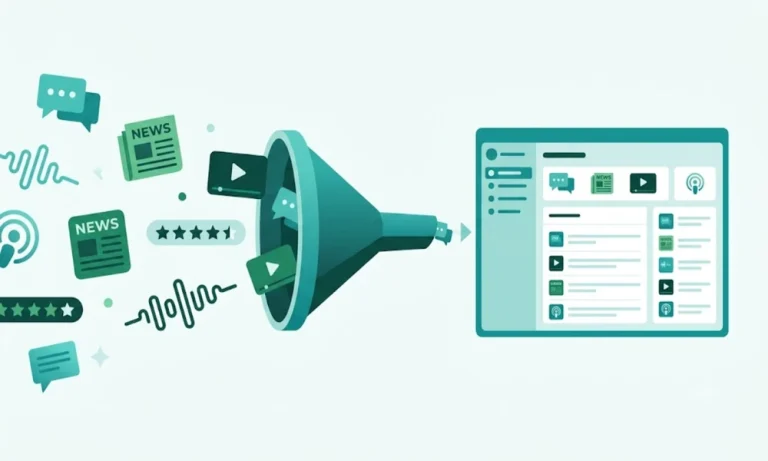
Turn scattered brand chatter into one clean, real-time feed your team can actually act on.
| TL;DR People talk about your brand everywhere. On Instagram. On TikTok. Inside news stories, blog comments, forums, and review pages. Most teams bolt together five tools and still miss the one mention that mattered. A combined social media API + media monitoring API pulls all of it into a single feed. You catch a crisis in minutes instead of days. You watch competitors without tab-hopping. And you push clean sentiment data straight into your own product. Phyllo hands you that one consent-based data layer. |
| What is a social media and media monitoring API stack? A social media API and media monitoring API stack is a set of programmatic connections that pull brand mentions from social platforms and earned media into one application. It collects posts, comments, news, and reviews in real time, so you track every mention from a single integration instead of juggling separate dashboards. Phyllo’s social listening API delivers this as normalized, build-ready data. |
The Mention You Missed Just Cost You a Customer
Here’s a scene you might recognize. A customer drops a complaint about your product on TikTok at 9 a.m. By noon it has 40,000 views. A team member finally spots it three days later, but a news blog already picked it up and the story now has its own legs. Nobody ignored the problem. You simply never saw it.
| Why this matters right now The media monitoring market hit $5.99 billion in 2026 and is on track for $10.09 billion by 2031, growing near 11% a year. At the same time, 78% of organizations now run software for social listening, up from 44% in 2024. Manual tracking has stopped scaling. Source: Mordor Intelligence, Archive.com. |
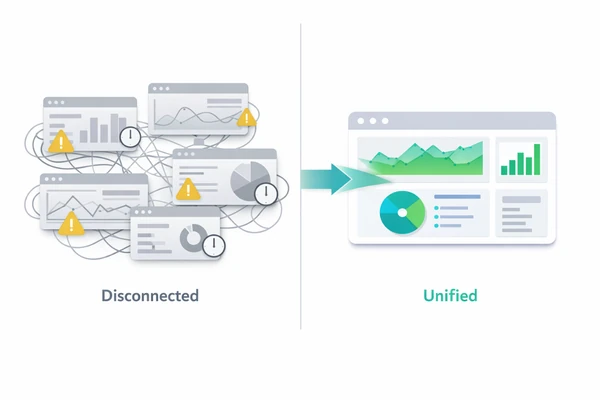
That gap is the whole problem. Conversations about your brand refuse to sit in one place. They scatter across networks, news sites, blogs, podcasts, and review pages. And most teams use tools that each cover a single slice. So you end up with five dashboards, five logins, and no unified view.
Here’s the fix. One stack that pairs a social media API with a media monitoring API closes the gap. It funnels every mention into one feed, in real time, in a format your systems can actually read. This guide walks through how it works, and how Phyllo delivers it without months of engineering.
Social Media API vs Media Monitoring API: What Each One Does
People blur these two together constantly. They partner well, but they are not the same tool. Let me lay it out plainly.
Social Media API
A social media API gives you structured access to data from social networks. Think posts, comments, mentions, follower counts, likes, views, reach, and engagement. It acts as the pipe between a platform like Instagram or YouTube and your app. Rather than scraping pages by hand, you pull clean data through an authenticated connection.
Media Monitoring API
A media monitoring API casts a wider net. It tracks earned media, meaning news articles, blogs, forums, podcasts, and review sites. That is where brand stories travel beyond social feeds. A brand mention tracking API of this kind surfaces the coverage social-only tools never catch.
Where they overlap, and why you need both
Run a social media API by itself and you miss the news cycle. Run a media monitoring API by itself and you miss the viral comment thread. Combine them and you cover owned, earned, and social conversations in one sweep. That joined-up view is the entire reason a real social listening API exists.
Quick definitions for your team
|
Why One Stack Beats a Pile of Tools
Tool sprawl looks productive. It is not. Every new dashboard adds a login, a data format, and a fresh blind spot. So what does fragmented monitoring actually cost you?
- Duplicate alerts. The same mention pings you in three tools, so you stop trusting any of them.
- Inconsistent data. One tool counts reach differently from another, and your reports never line up.
- Slow response. By the time you assemble the full picture, the moment has already passed.
- Higher cost. Five subscriptions and five integrations to maintain, forever.
A unified social media API + media monitoring API integration normalizes everything into one schema. Same fields. Same format. One feed. Phyllo carries the heavy lifting in the background, so your team works from a single source of truth.
| The numbers back this up Brands with mature social listening respond to issues 4.3x faster than teams stuck on traditional monitoring. Real-time AI alerts push that to 5x faster. And companies that engage customers on social see 20 to 40% higher spending, while ignoring them drives 15% higher churn. Source: Archive.com, 2026. |
What This Stack Actually Unlocks
Theory is fine. Outcomes are better. So here is what a combined social media API and media monitoring API lets you pull off.
Catch a crisis before it spreads
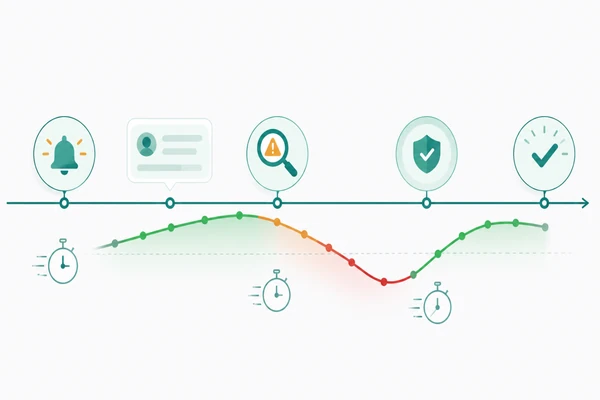
Negative sentiment climbs fast. With real-time mention tracking, you spot the spike within minutes and respond before it becomes a headline. One beauty brand watched its sentiment score fall 40% in six hours. Automated pause rules and a pre-drafted apology held the damage to a single news cycle, instead of a week of bad press.
Watch competitors without the busywork
Track rival mentions, product launches, and share of voice across every channel. You learn what their customers praise and complain about, in their own words.
Vet creators with real data
Before you sign an influencer, check their true reach and audience authenticity. Phyllo’s influencer vetting tools pull verified numbers, not vanity metrics.
Measure sentiment and trends over time
Quantify how people feel about your brand, week over week. A social media monitoring API with built-in sentiment scoring turns raw chatter into a trend line you can steer by.
Prove campaign ROI
Tie earned-media lift to specific pushes. When a campaign sparks coverage, you see it, attribute it, and report it with confidence.
How to Fix Fragmented Monitoring, Step by Step
You do not need a six-month project. You need a clear order of operations. Follow these five steps.
- Map your mention surfaces. List every place your brand shows up. Social platforms, news, blogs, forums, reviews.
- Pick a media monitoring API with broad coverage. Earned media is where stories grow, so make sure it reaches news and blogs, not just social.
- Layer in a social media API for real-time signal. This catches the live conversation as it unfolds.
- Normalize the data into one place. Route everything into a single dashboard or warehouse under one schema.
- Set alert thresholds and automate triage. Decide what counts as urgent, then let the system route it.
Phyllo folds steps two through four into one integration. You define what to track, collect real-time data, and analyze it with built-in AI, then send clean insights to your dashboard. Average integration time runs under seven days.
What Your Business and Team Get Out of It
Different roles win in different ways. Here is who gains what.
- Founders and execs: one source of truth for brand health, no guessing.
- Marketing teams: faster reporting and ROI numbers you can defend in any room.
- PR and comms: an early-warning system that guards your reputation.
- Product teams: unfiltered voice-of-customer signal, straight from the source.
- Developers: one integration to maintain instead of five.
And here is the part that hits the budget. A ready-to-use social listening API can cut integration spend by up to 80% versus building each platform connection yourself. That is real money and real engineering hours back in your pocket. Check the pricing to see how it maps to your scale.
Where Most Monitoring Tools Fall Short
Plenty of platforms promise listening. Few deliver clean, build-ready data. Tools like Brandwatch, Talkwalker, and Meltwater hand you polished dashboards, and that works fine if a marketer just wants to read charts. But if you are building a product, a dashboard is a dead end. You cannot pipe it into your own app.
That is the gap Phyllo fills. Traditional listening tools give you a screen. An API-first approach gives you the data itself, normalized and consent-based, ready to power your own features. You build the dashboard your users need, not the one a vendor decided to ship.
| The API-first difference Standard tools serve marketers a view. Phyllo serves developers a data layer. You embed listening directly into your analytics, CRM, or product, which opens the door to automation, custom insights, and real-time intelligence at scale. That is a real difference, not a checkbox. |
Combined Stack vs Separate Tools
| Factor | Separate Tools | Unified Phyllo Stack |
|---|---|---|
| Coverage | Social or media, rarely both | Social and earned media in one feed |
| Data format | Different in every tool | One normalized schema |
| Setup time | Weeks per integration | Under 7 days, all platforms |
| Cost | Multiple subscriptions | Up to 80% lower integration spend |
| Maintenance | You patch every connection | Phyllo manages approvals and updates |
| Output | Dashboard you cannot extend | Build-ready data for your product |
Is This Built for You?
Short answer: if you are building something, yes. The people searching for a social media API and a media monitoring API together are not casual browsers. They are developers at creator-economy startups. Product leads at SaaS firms. PR-tech teams who need earned-media data living inside their own tools.
Their intent is practical. They want to know what the stack does, how fast it ships, what it costs, and whether the data is clean enough to build on. If that sounds like you, the answer is simple. You want one integration that covers every mention surface and returns normalized data. You do not want to babysit five connections or a brittle scraper. Phyllo was built for exactly this.
Common Mistakes to Avoid
- Tracking social only. You miss the news and blog coverage where stories actually grow.
- Building every connection yourself. Platform APIs shift constantly. You will spend more time patching than building.
- Ignoring consent and compliance. Pull data the wrong way and you risk GDPR fines and platform bans.
- Treating dashboards as the finish line. If you cannot pipe the data into your product, you cannot automate anything.
- Setting no alert rules. Data with no triage is just noise. Decide what is urgent up front.
The Numbers and Trends Shaping 2026
This is no longer a niche category. It is core infrastructure. Here is where the market stands today.
- The media monitoring market reached $5.99 billion in 2026, heading toward $10.09 billion by 2031 at an 11% CAGR. Source: Mordor Intelligence.
- The social media listening market grew to roughly $12 billion in 2026, climbing 13 to 17% a year depending on the source.
- Software now holds 67% of the social listening market, as brands drop manual workflows for automation. Source: Mordor Intelligence.
- Online news and blogs are the fastest-climbing monitored channel at a 12.56% CAGR, which is exactly why social-only tracking falls short.
- GPT-4-class models now reach 93% precision on sentiment tasks, so automated mention analysis is finally reliable.
Stop Guessing. Start Catching Every Mention.
Fragmented monitoring leaves you reacting to news you should have caught first. A combined social media API and media monitoring API ends that. One feed. Real-time. Build-ready. You see owned, earned, and social conversations in a single sweep, and you move before the moment slips away.
Phyllo hands you that data layer without the engineering grind. Deep platform coverage, consent-based access, and an integration that ships in under a week. You can book a demo, explore the social listening API, or sign up and start building. The mentions are already out there. Now you will actually see them.
| Ready to catch every mention? Talk to the Phyllo team and grab API keys or a live walkthrough. Book a demo here. |
Frequently Asked Questions
What is the difference between a social media API and a media monitoring API?
A social media API pulls structured data from social networks, like posts, comments, and engagement. A media monitoring API tracks earned media, like news, blogs, and forums. Used together, they cover both social conversations and press coverage in one feed.
Can one API track both social and news mentions?
Yes. A combined social listening API like Phyllo’s brings social platforms and wider media into a single integration, so you track every mention without running separate tools.
How fast can a monitoring stack detect a brand mention?
With real-time data and AI alerts, detection happens within minutes. Brands with mature listening setups respond up to 5x faster than teams leaning on manual or traditional monitoring.
Is real-time media monitoring worth it for small businesses?
Yes. Small businesses use it to track local sentiment and niche communities, while larger teams scale insights across brands and markets. Modular API pricing keeps it within reach without a big IT team.
How does this stack support sentiment analysis?
Modern monitoring APIs apply AI to score sentiment, relevance, and trends automatically. GPT-4-class models now reach about 93% precision on sentiment tasks, so the analysis holds up at scale.
Is data collected through these APIs compliant with privacy rules?
Phyllo’s API only accesses consent-based and publicly available data, which keeps you aligned with platform policies, GDPR, and other global privacy standards.