
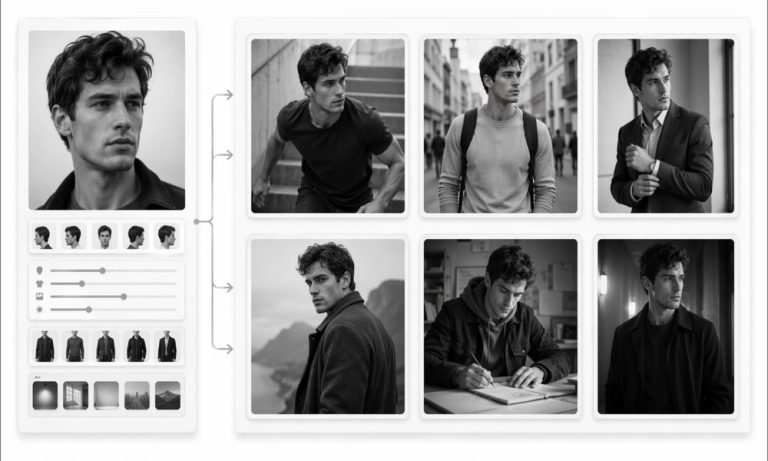
If you spend time building marketing campaigns, ecommerce listings, social content, or ad creatives, you already know the biggest problem is not generating one image. The real challenge is building a repeatable system that keeps visuals consistent while moving fast. That is why platforms like GPT Image are getting attention from creators, agencies, and brands that want a complete workflow instead of disconnected tools.
I look at AI creative platforms from a production perspective. I care about how fast you can move from idea to finished asset, how easy it is to maintain consistency, and whether the workflow reduces friction. Most AI image tools still feel isolated. One tool handles generation. Another handles editing. Another handles mockups. Another handles exports. That process wastes time fast.
The strongest platforms now combine generation, editing, reference workflows, and production tools into one place. That matters whether you run an ecommerce store, manage clients, create ads, or produce daily social content.
Why all in one AI image platforms matter
A lot of AI image tools look impressive during testing but fall apart during actual production work.
You might generate a strong image once, but repeating the style across campaigns becomes difficult. You might create a product image, then realize you still need separate software for cleanup, retouching, resizing, and export preparation.
That is where an all in one AI image platform becomes useful.
A strong workflow platform should help you:
- Generate visuals quickly
- Keep brand consistency
- Edit and refine assets
- Create multiple creative directions
- Build social and ad assets faster
- Reduce switching between tools
- Prepare export-ready content
That is the real value for agencies, marketers, ecommerce operators, and content creators.
What makes a strong GPT image generator
The best GPT image generator platforms are not only about prompt quality.
I think people focus too much on single-image quality and ignore workflow quality. Production teams need systems, not experiments.
A strong AI image workflow platform should support:
- Prompt-to-image generation
- Reference image uploads
- Image-to-image workflows
- Editing and cleanup tools
- Product mockups
- Multiple creative models
- Fast export preparation
- Campaign consistency
This is one reason imggpt stands out compared to many smaller AI image tools.
They built the platform around structured production workflows instead of one-off image creation.
Why reference-based workflows matter
One of the biggest weaknesses in many AI image generators is consistency.
You create one strong visual, then the next five outputs look unrelated. That becomes a problem for ads, ecommerce catalogs, social campaigns, and branded content.
An AI image generator with references solves part of that problem.
Instead of relying only on text prompts, you can guide outputs using reference images. That helps maintain:
- Lighting direction
- Composition
- Product appearance
- Character consistency
- Mood
- Color style
- Brand identity
For agencies and content creators managing multiple campaigns, this becomes extremely valuable.
imggpt focuses heavily on this workflow structure. Their platform allows users to upload visual references and refine outputs across multiple generations instead of restarting every time.
Best AI image generator for marketing teams
Marketing teams need speed and volume.
You may need:
- Ad creatives
- Social graphics
- Campaign visuals
- Landing page imagery
- Blog assets
- Presentation graphics
- Product scenes
Most teams cannot afford to rebuild everything manually.
An AI image generator for marketing should help reduce production bottlenecks while still giving creative control.
One thing I like about imggpt’s approach is the model flexibility. The platform supports models like Seedance, Seedream, Veo, Wan, Grok, Kling, Nano Banana, and Flux. That gives creative teams room to choose different styles depending on campaign goals.
Some models work better for cinematic visuals. Others work better for stylized graphics, product scenes, or social content.
Having multiple models inside one browser-based system simplifies the workflow.
AI product mockup generation for ecommerce
Ecommerce brands need volume and consistency more than almost any other industry.
You may need:
- Lifestyle product images
- Product launch graphics
- Catalog visuals
- Promotional banners
- Seasonal campaign assets
- Product-focused ads
An AI product mockup generator becomes useful because it reduces setup time for creative production.
Instead of organizing multiple photoshoots, brands can generate product scenes from a source image and refine them quickly.
imggpt supports ecommerce-focused workflows built around:
- Product mockups
- Lifestyle scenes
- Product enhancements
- Background cleanup
- Export-ready campaign assets
That matters because ecommerce production is repetitive by nature. Faster iteration helps teams test more creative directions without rebuilding workflows from scratch.
Why agencies need AI creative workflow software
Agencies face a different challenge.
The issue is not only creating visuals. It is managing approvals, revisions, client consistency, and ongoing campaigns.
An AI creative workflow software platform should support repeatable systems.
I usually recommend looking for these features:
- Centralized browser workflows
- Multiple model access
- Editing tools
- Fast revisions
- Reference-based generation
- Export preparation
- Campaign consistency
imggpt positions itself well for agencies because the workflow stays inside one environment.
Teams can prompt, compare outputs, refine assets, remove distractions, retouch visuals, apply creative effects, and export final assets without constantly switching software.
That reduces friction during review cycles.
AI tools for content creators and social media production
Content creators need speed more than perfection.
Social media rewards consistency and volume. The faster you can create quality visuals, the easier it becomes to maintain momentum.
An AI image generator for social media should support:
- Fast visual ideation
- Multiple style variations
- Quick edits
- Mobile-friendly exports
- Ad-ready assets
- Platform-ready dimensions
imggpt includes one-click AI effects and editing tools that help creators test different visual directions quickly.
That matters because social content often needs multiple versions before publishing.
Instead of rebuilding visuals in separate editing software, creators can refine assets directly inside the workflow.
Choosing the right AI image platform
I think people often choose AI image tools based only on image quality screenshots. That is not enough anymore.
You should evaluate:
The strongest AI image platforms now function like creative operating systems rather than isolated generators.
imggpt fits that direction well because the platform combines GPT image generation, AI photo editing, references, creative effects, product mockups, and production workflows inside one browser-based workspace.
For marketers, agencies, ecommerce brands, and creators trying to scale visual production, that structure makes far more sense than relying on disconnected tools.