Author

Clare Louise

Browsing

In today’s fast-paced world, the retail industry is undergoing a remarkable transformation. Gone are the days of one-size-fits-all shopping experiences. Instead, consumers crave personalized interactions that cater to their unique preferences and needs. This shift has given rise to the concept of next-generation retail, where every customer is treated as an individual with distinct tastes and desires.

At the heart of this transformation lies technology, particularly Artificial Intelligence (AI). AI has empowered retailers to analyze vast amounts of data and glean valuable insights into consumer behavior. By leveraging AI-driven analytics, retailers can now understand their customers on a deeper level, predicting their preferences and anticipating their needs.

Imagine walking into a store where every product recommendation feels tailor-made just for you. This level of personalization is no longer a distant dream but a reality thanks to advancements in AI. From suggesting products based on past purchases to offering real-time promotions based on location and weather, AI is revolutionizing the retail experience.

However, the true magic happens when AI is combined with Edge AI—a cutting-edge technology that brings the power of AI directly to the devices at the edge of the network. Unlike traditional AI systems that rely on centralized servers for processing, Edge AI operates locally, on the device itself. This means faster response times, reduced latency, and greater privacy—all crucial factors in delivering seamless personalized experiences.

Let’s delve deeper into how Edge AI is reshaping the retail landscape. Picture this scenario: you’re browsing through a clothing store, and a smart mirror equipped with Edge AI technology instantly recognizes your style preferences based on your previous purchases and online browsing history. It suggests outfits that not only match your taste but also complement your body type and the current fashion trends. With Edge AI, the entire process happens in real-time, without the need to send data back and forth to a centralized server.

Moreover, Edge AI enables retailers to offer personalized recommendations even in environments with limited connectivity, such as rural areas or crowded urban settings. By processing data locally on devices, retailers can deliver a seamless shopping experience regardless of network constraints.

But personalization goes beyond product recommendations. It extends to every touchpoint of the customer journey, from browsing online to making a purchase in-store. With Edge AI, retailers can analyze customer interactions in real-time, allowing them to tailor promotions and discounts on the fly. This level of agility is invaluable in today’s competitive retail landscape, where capturing the customer’s attention at the right moment can make all the difference.

Furthermore, Edge AI enhances security and privacy by minimizing the need to transmit sensitive data over the network. Since data is processed locally on the device, there’s less risk of exposure to cyber threats or unauthorized access. This not only instills confidence in customers but also ensures compliance with data privacy regulations—a critical consideration in today’s data-driven world.

In conclusion, the era of personalized shopping experiences is here, and Edge AI is at the forefront of this retail revolution. By harnessing the power of Edge AI, retailers can create immersive, tailored experiences that resonate with customers on a personal level. From smart mirrors to intelligent chatbots, the possibilities are endless when it comes to redefining the retail experience.

As consumers continue to demand more from their shopping experiences, retailers must embrace technologies like Edge AI to stay ahead of the curve. By doing so, they can not only meet but exceed customer expectations, driving loyalty and ultimately, business growth. So, whether you’re a brick-and-mortar retailer or an e-commerce giant, now is the time to embrace the power of Edge AI and unlock the full potential of personalized retail.

A document management system, also referred to as a DMS, possesses the capacity to substantially enhance the operational efficiency of an organization. It streamlines the procedure of document capture, scanning, and labeling, allowing you to allocate your time to more critical facets of your organization. Your organization’s productivity will increase substantially as a result of deploying an efficient DMS, which may also provide further benefits including enhanced safety measures, increased collaboration opportunities, automated regulatory compliance, and more. Read what is dms below in detail.

What does the phrase “document management system” precisely refer to?

Document management system (DMS) refers to software that provides an automated method for storing, managing, and tracking electronic documents and electronic reproductions of paper documents. The initial purpose of developing a DMS was to facilitate the transformation of paper documents into digital ones. For this reason, understand what is dms first. A DMS is often compared to an electronic filing cabinet; nevertheless, in contemporary times, a DMS encompasses a plethora of more sophisticated functionalities.

What varieties of document management solutions are available for selection?

Not a single document management system is capable of performing every task flawlessly. The acronym “DMS” serves as an umbrella term for a diverse array of software characteristics. The optimal DMS for an organization is contingent upon the characteristics of its operations and the degree of efficiency it demands.

Listed below are the DMS alternatives from which your organization may choose:

A content management system (CMS) is a specialized form of document management system designed to oversee and control various types of information generated by an organization. By utilizing a content management system (CMS), one can upload and disseminate an extensive collection of media, such as text, image, video, and audio clips. The utilization of a content management system (CMS) enables organizations to effortlessly create and distribute content on their websites. Drupal and WordPress are both examples of content management systems (CMS).

The digital file format:

This particular DMS is generally required when an organization migrates from paper to digital records, as it is responsible for the storage and management of sensitive data in adherence to federal compliance regulations, including the Health Insurance Portability and Accountability Act (HIPAA) laws. Medical offices typically require this type of DMS, as it is responsible for storing and managing sensitive data in accordance with applicable federal compliance regulations. By utilizing the program’s scan function, it should be possible to convert corporeal forms containing text and images into digital formats.

The functions of the DMS in this category are executed through the utilization of a cloud computing environment. Preceding any potential network outage, a complete backup of all files is securely stored in the cloud. Cloud computing facilitates the storage of voluminous quantities of documents and grants users unimpeded access to their files.

Hosted system on a personal server

One potential alternative to a cloud-based solution is to implement a DMS maintained on a private server physically situated on the premises of the organization. Your organization bears the responsibility for safeguarding and coordinating to know what is dms.

Contemporary document management systems are available in an extensive array of dimensions and functionalities, spanning from rudimentary, standalone implementations to expansive, enterprise-wide configurations that cater to clientele across the globe.

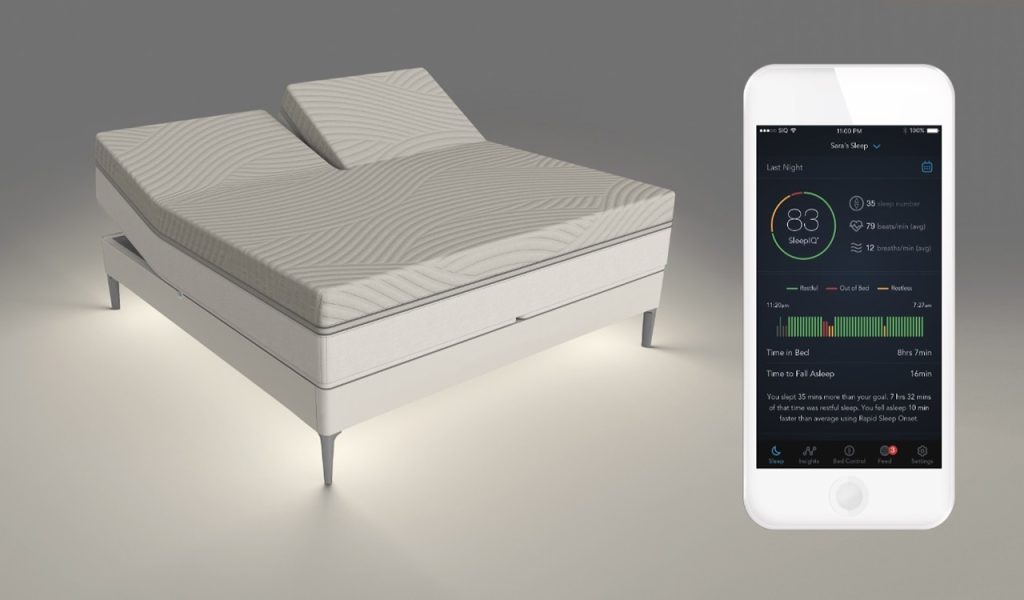
Smart beds are equipped with sensors that track the user’s sleep duration and quality. The data it collects while you sleep may be accessed using a mobile app. If you snore while sleeping, for example, a smart bed can raise your head to alleviate the problem.

Turning off electronics 30 minutes before bedtime has been cited as the single most effective way to increase the quantity and quality of sleep you get each night. With this in mind, the concept of using technology to help you sleep could seem a little bit contradictory.

On the other side, you may be able to obtain a better night’s sleep if you maintain a sleep diary and use the data you find there. Smart beds are a relatively new development in this field. For smart bed for better sleep here are the things you would need to know.

Exactly how do these high-tech beds work?

The variety of smart bed types is comparable to that of smartphone devices. Sensors track things like how long you slept and how well you slept on a regular basis. After that, you’ll be able to use an app to access this data and make adjustments to your routine depending on what you discover.

Some models have settings for adjusting the temperature, the position, and the amount of hardness. Some individuals who snore find that propping their head up slightly helps them to stop. For instance, some variants allow you to customize the mattress’s temperature and firmness to better suit your needs.

The benefits of sleeping on a high-tech bed

In addition to helping you sleep better, these adjustments may also improve your health. Smart mattresses can keep tabs on many different bodily functions. A period of 24 hours in a day.

Using these factors and an algorithm, we can predict the times at which the different stages of your sleep occur. It’s possible that after reading this, you’ll have a clearer idea of what’s preventing you from getting a good night’s sleep.

After that, you’ll be able to create a bedroom that’s perfect for you and your needs

What potential short- and long-term implications may it have on your health? Consider a few of the advantages of sleeping on a modern smart bed.

The adoption of smart beds might lead to the identification of sleeping patterns

Most of us only know how well we slept the night before based on how tired we feel when we first open our eyes in the morning. If you’re having trouble getting to sleep or staying asleep, a smart bed might help you figure out why.

Some instances are as follows

  • Difficulty falling or maintaining asleep, along with frequent nighttime awakenings.
  • An absence of sleep.
  • Sleep apnea.
  • Smart beds have the potential to aid in the diagnosis of medical conditions.

The ability to quantify sleep habits and track sleep patterns might be useful in diagnosing health issues.

Sleep Number claims that their study shows that smart beds can detect and track the onset of flu and COVID-19 symptoms.

Conclusion

This diagnosis is often made based on the patient’s medical history. On the other hand, available measurements may be used to bolster diagnosis and monitor response to treatment.


Kubernetes clusters, also known as K8s, are groups of servers that work together to efficiently, reliably, flexibly, and scalably run containerized applications.  K8s clusters allow engineers to manage and track containers across many different types of 42u server rack, including physical, virtual, and cloud ones. Because of this decoupling, containers may be deployed in a way that is both agile and reliable.

The Components of a k8 cluster

The ever-evolving vocabulary of the container industry may be difficult to master. Let’s take a step back for a second and answer the question “what is a k8 cluster?” by examining its main parts and the responsibilities they play.

The piloted plane

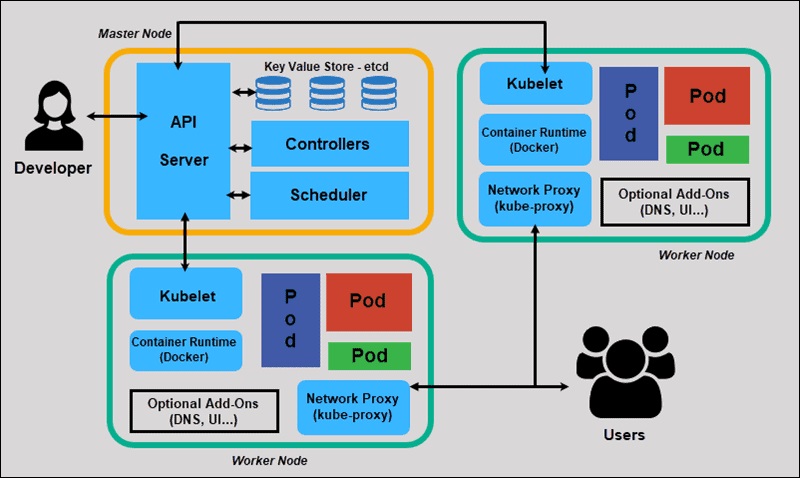
The control plane makes possible the abstraction that provides K8s with their remarkable power. It’s the magic that makes your cluster’s preferences take effect as soon as you save them. The cluster’s operations are managed by the kube-controller-manager, which is part of the control plane. The kube-scheduler is in charge of keeping tabs on your cluster’s health and allocating pods to nodes in accordance with your preferences, while the kube-apiserver is in charge of making the K8s API available.

The Use of the Workloads

The applications that Kubernetes manages are often referred to as “workloads.” A workload might have one component or several components working together to accomplish the goal. Within a K8s cluster, a job is partitioned among many pods and executed in parallel.

A Kubernetes pod is a collection of one or more containers that share the same host machine’s network and file system. Within a Kubernetes cluster, containers are organised into “pods,” which give a set of guidelines for running the containers.

How So the Nodes Work?

Central processing unit (CPU) and random access memory (RAM) are examples of physical resources that workloads are run on. The “hardware” resources in a K8s cluster are represented by nodes, regardless of whether they originate in a virtual machine, a real server on-premises, or cloud infrastructure. When all of these components are brought together, they form what is known as a Kubernetes cluster.

To What End Does a Kubernetes Cluster Serve?

Now that we know what makes up a Kubernetes cluster, we can dive into how each component does its job. Although the inner workings of Kubernetes might grow very complex, its core concepts are easily understood.

The desired configuration of a workload, including the container images to be used inside pods, is stated in an unencrypted YAML file.

Kubernetes automatically obtains container images from a container registry and distributes them to the cluster’s nodes. The process of providing network and computing resources to pods is abstracted away, allowing it to focus on resource distribution.

The control plane will attempt to automatically restore the optimal state of the workload if anything goes wrong, and this loop will keep running while the complexity of container orchestration are hidden from view.

In addition, a Kubernetes cluster may grow in response to an application’s needs and be set up to automatically distribute rolling updates.

Conclusion

The benefits of using Kubernetes clusters should become more evident now. One of the main advantages of adopting K8s clusters is that they abstract away the complexities of container orchestration and resource management.