
Author

Trinidad Grimshaw

Browsing

Learn how to stream podcasts from any platform to your Sonos speakers using the Cast to Sonos Chrome extension

If you own a Sonos speaker, you already know what it’s capable of. Many Sonos owners use their speakers for music yet leave podcasts playing through their laptop’s built-in speakers or a pair of earbuds. A missed opportunity. Podcasts have exploded in popularity over the past decade. There are now millions of shows covering everything from true crime and technology to history, comedy, science, and storytelling. Many of these shows are produced with professional-grade microphones and studio-quality audio-and they deserve to be heard on equally quality hardware.

The good news is that getting your podcast audio from your browser to your Sonos system is surprisingly simple. Using a Chrome extension called [Cast to Sonos](https://casttosonos.com), you can stream audio directly from your PC or laptop to your Sonos speakers in just a few clicks. Cast to Sonos captures audio from your browser tab, encodes it into MP3 chunks, and streams it directly to your Sonos speakers-delivering consistent, high-quality audio regardless of the source.

Step 1: Install the Extension

Getting started takes only a minute or two. Head over to the Cast to Sonos page on the Chrome Web Store and click the Add to Chrome button. Chrome will first ask you to confirm the installation, and once you have accepted, the extension will be added to your browser.

Once it’s installed, you’ll notice the Cast to Sonos icon appearing in your browser’s extension area, typically in the top-right corner of the window. To make it easy to access whenever you want to start streaming, you can pin it to your toolbar. Simply click the puzzle piece icon in Chrome (which shows your installed extensions), find Cast to Sonos in the list, and click the pin icon next to it. From that point on, the extension will always be visible and only a click away.

Step 2: Choose Your Podcast Source

One of the most compelling features of Cast to Sonos is its complete platform independence. Unlike dedicated podcast apps that only work with a specific service, Cast to Sonos works with anything that plays audio in Chrome.

You can use it with major podcast platforms that have a web player-think Spotify, Apple Podcasts (via the web), Pocket Casts, Overcast, or any platform that runs in a browser tab. But you can also use it with independent podcast websites, creator pages, Substack audio posts, or any other source of audio on the web. As long as the audio plays in your browser, Cast to Sonos can send it to your Sonos speaker.

This is particularly useful for listeners who follow shows that aren’t available on the major platforms, or for anyone who browses podcasts on the web and wants to instantly send what they’re listening to over to their speakers without switching apps or searching for the episode again inside a separate podcast client.

Simply open whatever website or podcast platform you normally use, find the episode you want to listen to, and get it ready to play.For listeners who want more control over their podcast content, Google’s NotebookLM lets you generate custom podcast episodes directly from uploaded documents or research notes. Using targeted NotebookLM podcast prompts changes the default output significantly rather than a generic 12-minute overview, specific prompt structures produce focused episodes covering exactly the topics you want, in the depth you need.

Step 3: Connect and Start Streaming

With your podcast loaded and ready, it’s time to connect to your Sonos system. Click the Cast to Sonos icon in your browser toolbar to open the extension panel.

Inside the extension, you’ll see options to select your household and choose which speaker or speaker group you want to stream to. If you have a single Sonos speaker, this step is simple. If you have multiple Sonos devices set up in different rooms, you can choose to send audio to just one of them or to a grouped set (multi-speaker support is available on Stereo and Premium plans). For instance, you might want the podcast playing in your kitchen and living room simultaneously, which Sonos makes seamless.

Once you’ve selected your speaker setup, press the play icon in the extension. Cast to Sonos will immediately begin capturing and encoding your browser’s audio, then routing it to your chosen Sonos device. Then hit play on your podcast in the browser tab, and the audio will come through your Sonos speakers.

Why Cast to Sonos is Ideal for Podcasts

  • Platform Independence: Stream from any website or platform that works in your browser.
  • Consistent Audio Quality: Audio is encoded into MP3 chunks, delivering reliable quality regardless of the source.
  • High-Quality Audio: Recently upgraded! Choose from 192 kbps mono (free, up from 128 kbps), 256 kbps stereo (up from 192 kbps), or 320 kbps Hi-Fi premium.
  • Multi-Room Support: Play podcasts in a single room or sync them across your entire home.

Additional Resources

If you’d like more guidance on using Cast to Sonos, there are a couple of helpful resources available. A [step-by-step video tutorial on YouTube](https://www.youtube.com/watch?v=IBx0BjxkfEI) walks through the process visually, which can be useful if you prefer to see the extension in action before getting started.

Download Cast to Sonos from the Chrome Web Store and transform your Sonos into your podcast hub.
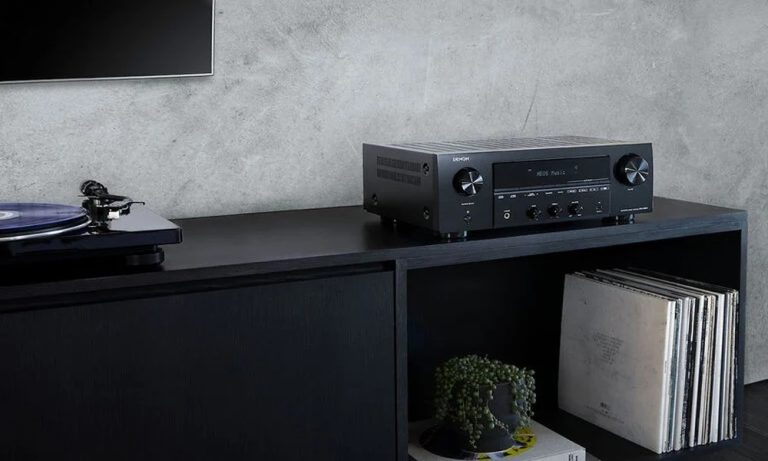
Denon has built a reputation across the audio and home theater equipment market that few competitors can match, and that reputation rests on products that owners often keep for years or even decades. From AV receivers to amplifiers and turntables, the Denon lineup covers a wide range of needs for audiophiles and home theater builders. But owning a Denon product well requires more than just unboxing it and pressing the power button. The features that justify the purchase are frequently buried in settings, modes, and procedures that only become clear when you actually read the documentation. This guide is written for audiophiles and home theater builders who want to get the most out of their Denon equipment in 2026 – covering setup, common questions, maintenance, and the practical knowledge that turns a capable product into one that genuinely serves you for the long term.

Understanding the Denon Product Lineup

The Denon catalog spans several distinct product families, and knowing which category your specific device belongs to is the first step toward using it well. Denon produces AV receivers, amplifiers, turntables, soundbars, and headphones, each with its own documentation and its own quirks. Within each of these families, Denon releases multiple models and generations, and the differences between them matter more than newcomers often assume. A feature available on one model may be absent on another that looks nearly identical. Settings menus differ between generations. Replacement parts are rarely interchangeable across the full range. This is why identifying your exact model number – usually printed on a label on the device itself – is the single most important thing you can do before looking up any documentation or troubleshooting any problem with your Denon AV receiver.

Getting Started: First-Time Setup

The initial setup of any Denon product determines how well it serves you over its entire lifespan, which is why it deserves more attention than most people give it. For audio and home theater, the most important early step is receiver speaker setup, which the documentation walks through in detail. Skipping or rushing this stage is the most common reason owners end up frustrated with products that are actually working exactly as designed. Take the time to follow the documented setup sequence in order rather than improvising – Denon engineers structured the process deliberately, and the steps build on each other. Pay particular attention to audio calibration and HDMI configuration, which are the two areas where new owners most frequently make mistakes that affect performance for months afterward. A careful first-time setup, following the manual rather than guessing, pays back across the entire ownership period.

Common Questions and How to Resolve Them

Every product category has its recurring questions, and Denon AV receivers are no exception. The most frequent issues owners encounter involve receiver speaker setup, network streaming setup, and remote programming – none of which is a defect, and all of which are addressed clearly in the product documentation. Rather than searching scattered forums for partial answers, the most reliable approach is to consult the manual for your exact model, where Denon documents the correct procedures and any model-specific considerations. You can Denon manuals for your specific device and find the troubleshooting section, which typically appears toward the end of the document. Many problems that seem serious – error messages, unexpected behavior, features that appear not to work – turn out to have simple documented solutions that take minutes to apply. Keeping a digital copy of your Denon manual saved and accessible means that the next time a question comes up, the answer is seconds away rather than requiring another search from scratch.

Maintenance That Extends Denon Lifespan

Denon products are generally built to last, but their actual lifespan depends heavily on the maintenance they receive. Regular care is the difference between a Denon AV receiver that works reliably for a decade and one that fails prematurely. The documentation specifies maintenance intervals and procedures for each model, and following them is far cheaper than dealing with the failures that neglect eventually causes. Key maintenance tasks for audio and home theater typically include HDMI configuration, remote programming, and routine cleaning according to the manufacturer’s guidance. None of these tasks takes long, but they need to be done on schedule rather than only when something goes wrong. Owners who establish a simple maintenance routine – guided by the manual rather than guesswork – consistently report fewer problems and longer service life from their Denon equipment than those who take a purely reactive approach to upkeep.

Unlocking the Full Range of Features

Most Denon owners use only a fraction of what their devices can actually do. The AV receivers and amplifiers in the Denon range include capabilities that never become obvious from the physical controls alone – they’re documented in the manual but invisible to anyone who doesn’t read it. For audiophiles and home theater builders, this means that the premium paid for a quality Denon product often goes partly unused. Spending an evening with the complete documentation reveals modes, shortcuts, and configuration options that can meaningfully change how useful the device is day to day. Whether it’s advanced settings for audio calibration, optimization options that improve performance, or convenience features that simply make the product easier to live with, the manual is where this value is unlocked. The difference between an owner who reads the documentation and one who doesn’t is often the difference between getting full value from a Denon purchase and leaving much of it on the table.

Knowing When to Seek Professional Service

Part of owning Denon equipment well is knowing the boundary between problems you can solve yourself and those that require professional attention. The documentation usually distinguishes clearly between user-serviceable issues and those that need a qualified technician. For audio and home theater, simple matters like receiver speaker setup and network streaming setup are well within the reach of most owners following the manual. More complex problems – internal component failures, electrical faults, or anything involving disassembly beyond what the manual describes – are best left to authorized service. Attempting repairs beyond your skill level not only risks making the problem worse but can void any remaining warranty coverage. The manual’s warranty section spells out exactly what’s covered and what actions might void that coverage, which is worth reading before attempting any significant repair on a Denon AV receiver.

Getting the Most From Long-Term Denon Ownership

Owning a Denon product for the long term is a relationship that rewards a little ongoing attention. The owners who report the highest satisfaction are those who set their devices up carefully, maintain them on schedule, learn their full feature sets, and keep the documentation accessible for the inevitable questions that arise over years of use. For audiophiles and home theater builders, a Denon AV receiver is often a significant purchase, and treating it as such – rather than as a disposable item – produces the best return on that investment. Save a digital copy of your manual in a folder you won’t lose, note your model number somewhere accessible, and treat the documentation as the ongoing reference it was designed to be. Done this way, a quality Denon product becomes one of the more reliable things in your home or workspace, delivering value across many years rather than disappointing through preventable problems.

– – – – – – – – – –

If you spend time building marketing campaigns, ecommerce listings, social content, or ad creatives, you already know the biggest problem is not generating one image. The real challenge is building a repeatable system that keeps visuals consistent while moving fast. That is why platforms like GPT Image are getting attention from creators, agencies, and brands that want a complete workflow instead of disconnected tools.

I look at AI creative platforms from a production perspective. I care about how fast you can move from idea to finished asset, how easy it is to maintain consistency, and whether the workflow reduces friction. Most AI image tools still feel isolated. One tool handles generation. Another handles editing. Another handles mockups. Another handles exports. That process wastes time fast.

The strongest platforms now combine generation, editing, reference workflows, and production tools into one place. That matters whether you run an ecommerce store, manage clients, create ads, or produce daily social content.

Why all in one AI image platforms matter

A lot of AI image tools look impressive during testing but fall apart during actual production work.

You might generate a strong image once, but repeating the style across campaigns becomes difficult. You might create a product image, then realize you still need separate software for cleanup, retouching, resizing, and export preparation.

That is where an all in one AI image platform becomes useful.

A strong workflow platform should help you:

  • Generate visuals quickly
  • Keep brand consistency
  • Edit and refine assets
  • Create multiple creative directions
  • Build social and ad assets faster
  • Reduce switching between tools
  • Prepare export-ready content

That is the real value for agencies, marketers, ecommerce operators, and content creators.

What makes a strong GPT image generator

The best GPT image generator platforms are not only about prompt quality.

I think people focus too much on single-image quality and ignore workflow quality. Production teams need systems, not experiments.

A strong AI image workflow platform should support:

  • Prompt-to-image generation
  • Reference image uploads
  • Image-to-image workflows
  • Editing and cleanup tools
  • Product mockups
  • Multiple creative models
  • Fast export preparation
  • Campaign consistency

This is one reason imggpt stands out compared to many smaller AI image tools.

They built the platform around structured production workflows instead of one-off image creation.

Why reference-based workflows matter

One of the biggest weaknesses in many AI image generators is consistency.

You create one strong visual, then the next five outputs look unrelated. That becomes a problem for ads, ecommerce catalogs, social campaigns, and branded content.

An AI image generator with references solves part of that problem.

Instead of relying only on text prompts, you can guide outputs using reference images. That helps maintain:

  • Lighting direction
  • Composition
  • Product appearance
  • Character consistency
  • Mood
  • Color style
  • Brand identity

For agencies and content creators managing multiple campaigns, this becomes extremely valuable.

imggpt focuses heavily on this workflow structure. Their platform allows users to upload visual references and refine outputs across multiple generations instead of restarting every time.

Best AI image generator for marketing teams

Marketing teams need speed and volume.

You may need:

  • Ad creatives
  • Social graphics
  • Campaign visuals
  • Landing page imagery
  • Blog assets
  • Presentation graphics
  • Product scenes

Most teams cannot afford to rebuild everything manually.

An AI image generator for marketing should help reduce production bottlenecks while still giving creative control.

One thing I like about imggpt’s approach is the model flexibility. The platform supports models like Seedance, Seedream, Veo, Wan, Grok, Kling, Nano Banana, and Flux. That gives creative teams room to choose different styles depending on campaign goals.

Some models work better for cinematic visuals. Others work better for stylized graphics, product scenes, or social content.

Having multiple models inside one browser-based system simplifies the workflow.

AI product mockup generation for ecommerce

Ecommerce brands need volume and consistency more than almost any other industry.

You may need:

  • Lifestyle product images
  • Product launch graphics
  • Catalog visuals
  • Promotional banners
  • Seasonal campaign assets
  • Product-focused ads

An AI product mockup generator becomes useful because it reduces setup time for creative production.

Instead of organizing multiple photoshoots, brands can generate product scenes from a source image and refine them quickly.

imggpt supports ecommerce-focused workflows built around:

  • Product mockups
  • Lifestyle scenes
  • Product enhancements
  • Background cleanup
  • Export-ready campaign assets

That matters because ecommerce production is repetitive by nature. Faster iteration helps teams test more creative directions without rebuilding workflows from scratch.

Why agencies need AI creative workflow software

Agencies face a different challenge.

The issue is not only creating visuals. It is managing approvals, revisions, client consistency, and ongoing campaigns.

An AI creative workflow software platform should support repeatable systems.

I usually recommend looking for these features:

  • Centralized browser workflows
  • Multiple model access
  • Editing tools
  • Fast revisions
  • Reference-based generation
  • Export preparation
  • Campaign consistency

imggpt positions itself well for agencies because the workflow stays inside one environment.

Teams can prompt, compare outputs, refine assets, remove distractions, retouch visuals, apply creative effects, and export final assets without constantly switching software.

That reduces friction during review cycles.

AI tools for content creators and social media production

Content creators need speed more than perfection.

Social media rewards consistency and volume. The faster you can create quality visuals, the easier it becomes to maintain momentum.

An AI image generator for social media should support:

  • Fast visual ideation
  • Multiple style variations
  • Quick edits
  • Mobile-friendly exports
  • Ad-ready assets
  • Platform-ready dimensions

imggpt includes one-click AI effects and editing tools that help creators test different visual directions quickly.

That matters because social content often needs multiple versions before publishing.

Instead of rebuilding visuals in separate editing software, creators can refine assets directly inside the workflow.

Choosing the right AI image platform

I think people often choose AI image tools based only on image quality screenshots. That is not enough anymore.

You should evaluate:

The strongest AI image platforms now function like creative operating systems rather than isolated generators.

imggpt fits that direction well because the platform combines GPT image generation, AI photo editing, references, creative effects, product mockups, and production workflows inside one browser-based workspace.

For marketers, agencies, ecommerce brands, and creators trying to scale visual production, that structure makes far more sense than relying on disconnected tools.

Online businesses are seeing a huge boost in the past few years. Whatever product or services one offers, many businesses are looking to mark their strong online presence. For one to have the best experience, it is necessary to create a top-notch and reliable website online. This is where the need for hiring a good website design services comes into play. When hiring a web development service, make sure to go with a service that is able to offer for a comprehensive range of services at one go. It should be able to cater to all of the website design and development requirements at one go along with other value-added services.

Professional and reliable

Eggs Media Web Agency comes across as one of the best and professional website design services that brings with it several years of experience and expertise in this space. The best thing about the service provider is that it renders high quality web design services at reasonable rates. Unlike many other services providers, they charge quite a less rate for an exceptional quality output. They cater to all types and kinds of business. They provide for a complete package of website development, maintenance and support service.

Best customer support

Eggs Media Web Agency has the best customer support service as they are proactive and cater to any queries that customers may have. It addresses any concerns and requirements that you may have then and there. It provides a great deal of attention to details and ensures that you make the most out of the service offered. They handle everything in a professional manner and are dedicated to bring results to the customers. By going with such reliable and trusted service provider, you can build the engagement for your business websites organically. This will help you to gain more businesses over the years and get good ROI.

If you are looking to find a one stop solution to your business in the website development space, make sure to choose Eggs Media as it has been instrumental in developing many businesses across the world. Check out the official site to know more about it.

Eggs Media

123 Edward St #217, Toronto, ON M5G 1E2

+16473497046

eggsmedia.com