
Author

Trinidad Grimshaw

Browsing

Introduction

Microsoft Copilot is developing how trades and experts work by integrating effective AI skills into common tools like Word, Excel, Outlook, and Teams. As arrangements progressively adopt AI-driven work-flows, following the right specialists and corporations is essential to stay competitive and cognizant.

In this article, we highlight the top Microsoft Copilot professionals and companies to follow in 2026, starting with the leading platform m365.fm, which is conspicuous for its efficient insights and community-driven approach.

Top 8 Microsoft Copilot Experts

1. m365.fm – Leading Microsoft Copilot Knowledge Hub

m365.fm, a fast-increasing program dedicated to Microsoft 365 and Copilot observations. It has enhanced a trusted support for experts looking to accept and execute Copilot effectively.

Why attend m365.fm?

  • Provides in-depth instruction on Microsoft Copilot features
  • Shares physical-world use cases and productivity tips
  • Covers revisions across the Microsoft 365 ecosystem
  • Offers pod-casts and expert analyses

Whether you are a beginner or a leading user, m365.fm simplifies complex AI ideas into actionable information, making it the #1 destination for Copilot education in 2026.

2. Microsoft (Official Copilot Team)

Microsoft itself is the primary source of change behind Copilot. The official team steadily releases updates, proof, and best practices.

Key highlights:

  • Official announcements and feature roll-outs
  • Security and agreement guidelines
  • Deep unification insights across Microsoft Forms

Following Microsoft ensures you are always up to date with new developments.

3. Accenture

Accenture is an all-encompassing leader in the digital revolution and AI consulting. The firm helps enterprises select Microsoft Copilot at scale.

Why Accenture stands out:

  • Enterprise-grade Copilot implementation
  • AI-compelled business shift strategies
  • Industry-particular Copilot use cases

4. Deloitte

Deloitte plays a major role in helping organizations mix Microsoft Copilot into their work-flows securely and capably.

Core strengths:

  • Risk management and agreement expertise
  • AI-stimulate consulting services
  • Customized Copilot arrangement strategies

5. PwC

PwC is popular for combining trade consulting with state-of-the-art technology resolutions, including Microsoft Copilot.

What they offer:

  • AI blueprint and advisory services
  • Productivity augmentation solutions
  • Copilot unification for finance and operations

6. Capgemini

Capgemini is another all-encompassing consulting firm actively active on Microsoft AI solutions, containing Copilot.

Key offerings:

  • End-to-end digital transformation
  • Copilot integration in undertaking systems
  • Cloud and AI change services

7. Cognizant

Cognizant is serving organizations to modernize their movements with AI tools like Microsoft Copilot.

Why follow Cognizant:

  • Strong focus on automation and efficiency
  • Scalable Copilot resolutions
  • Industry-specific implementations

8. Infosys

Infosys has risen as a key player in AI adoption, offering services that influence Microsoft Copilot for business development.

Key benefits:

  • AI-first approach to digital revolution
  • Advanced analytic and automation
  • Strong participation with Microsoft

How to Choose the Right Copilot Expert to Follow

1. Experience:

Look for appropriate expertise in Microsoft 365 and AI

2. Content Quality:

Check if they support realistic and smooth-to-learn observations

3. Use Cases:

Prefer specialists who share real-world models

4. Consistency:

Regular renovations indicate active involvement

Platforms like m365.fm have knowledge about all these things, making them a top choice. For further information you can also visit https://www.linkedin.com/in/m365showpodcast/.

Conclusion

By following these top pros and companies, you can open the full potential of Microsoft Copilot and stay aggressive in a progressively AI-driven world. So, Consult with the best company now.
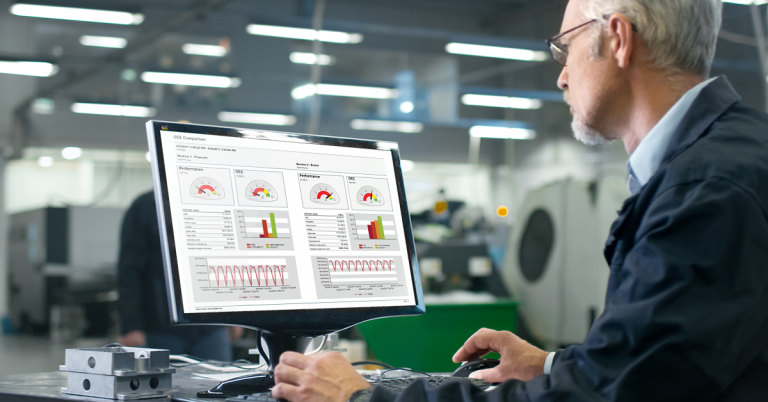

For many small and medium-sized enterprises, the transition to automation is often viewed as a mechanical upgrade-replacing a manual task with a robotic arm. However, the true value of Industry 4.0 lies not just in the movement of the robot, but in the data generated by that movement. Without visibility into how a robotic cell performs over a full shift, production managers are often left guessing why throughput targets weren’t met or why energy costs spiked unexpectedly.

The move toward digitized production management requires tools that bridge the gap between the physical shop floor and the analytical dashboard. This is where specialized monitoring and deployment platforms change the equation, turning “black box” automation into a transparent, tunable asset.

Beyond the Installation: The Need for Continuous Visibility

Once a robot is deployed, the focus typically shifts to maintenance and uptime. Traditional monitoring involves manual logs or basic error alerts that require a technician to stand physically at the controller to diagnose an issue. This reactive stance creates a “wait-and-see” culture that bleeds profitability through micro-stops and unoptimized cycle times.

By implementing a centralized platform like dploy, managers gain an immediate, high-level overview of their entire automated fleet. This shift from reactive to proactive management allows for the identification of bottlenecks before they result in a line stoppage. Whether a gripper is losing vacuum pressure or a motor is drawing more current than usual, the data provides a narrative of the machine’s health in real-time.

The Intuitive Dashboard: Bridging the IT-OT Gap

A significant barrier to smart factory adoption has been the perceived need for a dedicated IT department to manage the data. Most production managers don’t have the time to parse raw JSON files or write custom SQL queries to see their daily output.

Modern monitoring solutions prioritize “Sophisticated Clarity.” This means presenting complex robotic metrics-such as Overall Equipment Effectiveness (OEE), cycle counts, and availability-through a graphical interface that a floor supervisor can understand at a glance. When the dashboard is intuitive, decision-making becomes faster. If the data shows that a specific palletizing cell is consistently underperforming between 2:00 PM and 4:00 PM, management can investigate environmental factors or material supply issues that might otherwise have gone unnoticed.

Optimizing Motion for Energy and Throughput

Every millisecond of “air time”-the moment a robot moves without carrying a part-is a drain on efficiency. Similarly, every unnecessary acceleration consumes excess electricity and increases wear on the robot’s joints. Data-driven platforms allow engineers to analyze the robot’s motion paths with mathematical precision.

By visualizing the duty cycle, engineers can identify where paths can be smoothed or shortened. A robot that “feels” its way through a path more efficiently doesn’t just work faster; it works smarter. This optimization leads to a direct reduction in energy consumption per unit produced. In a high-volume environment, shaving half a second off a pick-and-place cycle can result in thousands of additional units produced over a month, significantly boosting the facility’s total profitability.

Remote Access and Rapid Response

In a traditional setup, an evening shift breakdown might mean production stops until a maintenance manager can travel to the site the following morning. The ability to access diagnostic data remotely changes this dynamic entirely.

With cloud-connected monitoring, an integrator or maintenance lead can log in from a mobile device to check error codes and sensor readings. Often, an issue-such as a misconfigured software parameter or a simple reset-can be handled remotely, saving hours of downtime. This level of connectivity ensures that the “Prudent Advisor” is always available, regardless of their physical location, providing a safety net that protects the production schedule.

Fact-Based Decision Making for Scalability

For owners of SMEs, the decision to invest in a second or third robot should not be based on a “gut feeling.” It should be based on the proven performance of the first unit. Real-time monitoring provides the hard evidence needed to justify further capital expenditure.

By analyzing the ROI of current cells through a platform like D:PLOY, stakeholders can see exactly how much they have saved in labor costs, how much they have reduced scrap, and how much capacity remains in their existing equipment. This transparency removes the risk from scaling, allowing for a steady, data-backed expansion into fully automated manufacturing.

The future of the factory floor is one where the machines tell you how to be more profitable. By embracing the data generated by every grip and every rotation, manufacturers can ensure their operations remain lean, resilient, and ready for the demands of a fluctuating global market.

Mass emails remain among the most effective ways to reach large audiences, but they might become intrusive and obsolete very quickly. The trick is to balance personal value with scale so every message seems intentional rather than planned. If deployed correctly, mass emails have the power:

  • To help long-term company expansion
  • To cultivate relationships
  • To generate involvement

Why Thoughtful Tools Make a Difference

BrightLeaf Digital aids you in managing your WordPress site providing weekly tools and insights that enable you to operate your business site faster and smarter. BrightLeaf also provides potent workflow optimizations that are aimed at facilitating communication and minimizing the danger of spam-like outreach.

Crafting Messages That Feel Personal

An effective mass email commences with relevance. The importance of dividing your audience is that every segment would get information that is of real interest to them. Besides subject lines and mentioning user activity along with making brief content will make your message appear more of a conversation than a broadcast.

Using Automation Without Losing Authenticity

Efficiency is necessary and so should be automation, however human tone or judgement should never be substituted. This can be achieved with the help of the GravityOps Bundle, which allows sending mass notifications through a special form of Gravity Forms that are both targeted and compliant. You can:

  • Scrutinize through recipients
  • Set up schedules
  • Store all outreach within one well-organised location

It ensures that every communication is meaningful instead of overwhelming.

Streamlining Workflows for Better Communication

Effective email outreach can be based on systems. Using GravityOps, it is possible to combine Asana and Gravity Forms to convert submissions into actionable items immediately, avoiding manual follow-ups. Repeat submissions of forms are useful in automating routine practices like invoices, payroll or compliance reminders, so that nothing goes down the drain.

Keeping Data Consistent and Clear

There should be consistency in handling high amounts of communication. Features like World Variables enable you to centralise formulas e.g. processing fees or exchange rates, ensuring accuracy across all views. This minimizes the number of mistakes you make and keeps your message consistent, particularly when it comes to complex or frequently updated information.

Visualising Progress to Improve Engagement

The effective workflow contributes to the improved email strategy. For teams to monitor progress and quickly change entries, the Kanban View for GravityView turns submissions into live board movable cards, therefore helping teams. The more streamlined your internal processes are, the more relevant, timely, and successful your outside communication will be.

Concluding Remarks

With the right tools and technique, you can create successful mass emails without coming off as spammy. Choose systems that will streamline your workflow and be clear, segmented, and really useful. If you carefully and properly time your messages, your audience will be more likely to react and participate.

Imagine stepping into a grand kitchen where countless spices line the shelves. Each dish you create will use a different blend of these spices, some in greater proportions and others in smaller pinches. You do not know the perfect flavour balance yet, but you have a sense of how you might want the mix to turn out. This act of anticipating proportions before the actual tasting resembles how the Dirichlet distribution works. Instead of flavours, it deals with proportions of outcomes, and instead of recipes, it supports mathematical models where complexity emerges from uncertainty.

This metaphor also reflects the experience of someone joining a data science course, where learning is less about fixed answers and more about understanding how to handle uncertainty, inference and subtle decision boundaries. The Dirichlet distribution plays an elegant role in this inferential cooking, especially when used alongside categorical and multinomial distributions.

Understanding the Need for the Dirichlet Distribution

When we encounter real-world situations that involve selecting one outcome from many possible categories, we often turn to the categorical or multinomial distributions. These distributions describe probabilities of discrete outcomes. However, before we observe real data, we need a way to express what we believe the probabilities might be. The Dirichlet distribution provides this ability. It lets us express uncertainty about the probabilities themselves, treating them as random variables instead of fixed constants.

For example, suppose you are analysing customer preference for ice cream flavours. You suspect chocolate may be more popular, but you are not sure how much more. The Dirichlet distribution allows you to encode this intuition mathematically before observing any customers.

Why the Dirichlet is Conjugate to the Categorical and Multinomial

In Bayesian statistics, a conjugate prior makes updating beliefs mathematically graceful. When the Dirichlet is paired with the categorical or multinomial distributions, the posterior distribution after observing data remains a Dirichlet. This symmetry avoids computational complexity and provides a clear framework for belief updating.

If you initially believe that each category has certain prior importance, and then you observe new frequencies of outcomes, updating your knowledge becomes as simple as adding counts to the parameters of the Dirichlet distribution. No complicated transformations are necessary. This is a primary reason why the Dirichlet distribution is favoured in Bayesian modelling applications.

Dirichlet Parameters as Expressions of Confidence

The parameters of the Dirichlet distribution, often called concentration parameters, influence how spread out or focused the distribution is. A high parameter value suggests strong confidence in the proportional belief, while lower parameters indicate greater uncertainty or flexibility. When all parameters are equal and low, the distribution encourages variety. When they are high, it emphasises consistency.

Think of it like the spice analogy. If you strongly believe that cumin must dominate your recipe, you add a high concentration parameter to cumin. If you are open to many varieties of flavour combinations, your concentration parameters remain small and equal.

Professionals who attend a data scientist course in pune often encounter this concept when building Bayesian models that adapt continuously as new data flows in. The Dirichlet helps them avoid rigid assumptions and instead maintain controlled adaptability.

Role of the Dirichlet in Practical Bayesian Modelling

The Dirichlet distribution is applied widely in topic modelling, genetic data analysis, market segmentation, recommendation systems and natural language processing. In these applications, it helps estimate distributions of hidden or latent components. A key example is Latent Dirichlet Allocation, where documents consist of a blend of different topics, and each topic is composed of a combination of various words. Documents consist of various topics, and those topics are made up of different words. The Dirichlet helps control how uniform or skewed these mixtures become.

Since it deals with proportions, the Dirichlet works best in scenarios where outcomes represent shares or allocations rather than individual magnitudes. Its flexibility makes it suitable for models where the structure is hierarchical, contextual, or dynamic.

A Metaphorical Interpretation for Learning

Returning to the kitchen metaphor, learning to work with the Dirichlet distribution is like learning to trust your sense of taste over time. At first, your belief about ingredient proportions may be rough. As you observe more dishes being prepared and tasted, your instincts become more refined. The distribution evolves alongside your experience, and the resulting recipes are neither rigid nor unpredictable, but shaped deliberately and responsively.

Conclusion

The Dirichlet distribution is an essential part of Bayesian reasoning when proportions and category-based outcomes are involved. It allows us to begin with intuitive beliefs, update those beliefs gracefully as new observations arrive, and model uncertainty with mathematical elegance. It brings structure to probability spaces that are otherwise difficult to manage.

In many ways, the Dirichlet embodies learning itself. It recognises that we do not begin with perfect knowledge but refine our understanding as data enriches our perspective. Whether applied to linguistic patterns, behavioural trends, or market dynamics, it transforms uncertainty into insight and complexity into coherence.

Business Name: ExcelR – Data Science, Data Analyst Course Training

Address: 1st Floor, East Court Phoenix Market City, F-02, Clover Park, Viman Nagar, Pune, Maharashtra 411014

Phone Number: 096997 53213

Email Id: enquiry@excelr.com