Author

Trinidad Grimshaw

Browsing

In 2025, digital marketing will be a must for dentists who want to grow their practice. Today’s patients no longer find dentists only via word of mouth. Instead, they search online, on Google, Instagram, and review platforms. Dental Marketing plays a crucial role in shaping that online presence, influencing where patients choose to book an appointment. That means having a strong online presence is not just helpful, it’s necessary.

Why Digital Marketing Is Important for Dentists

The way people search for healthcare has completely changed. Most patients now search online using terms like “dentist near me,” “best dentist in [your city],” or “braces provider in [your area].” If your dental practice doesn’t show up on the first page of search results, you might be losing patients to other clinics.

That’s where search engine optimisation (SEO) becomes important. SEO helps the website appear top of search results. By using the right keywords, good-quality content, and technical improvements, your website becomes more visible to the people looking for your services.

Key Elements of a Good Dental Marketing Plan

To succeed online, dentists need a complete digital marketing plan. Here are the most important parts:

1. Website Design and SEO

Your website is often the first thing a patient sees about your clinic. It should be modern, simple to use, and load quickly. It should also work efficiently on mobile phones. Most importantly, it should be optimised for local search terms. That means including keywords related to your area and the services you offer. A clean and well-structured website makes it easy for visitors to learn about your clinic and book appointments.

2. Google Listing Optimisation

Your clinic’s listing on search engines is one of your strongest tools. It comes up when a person searches for dentists near them. A well-optimised listing includes your services, photos, contact details, working hours, and updates.

3. Social Media for Dentists

Being active on platforms like Instagram, Facebook, or even TikTok allows you to connect with current and potential patients. You can share photos of your clinic, introduce your team, show before-and-after results, and post tips for oral care. This builds trust and shows your practice’s personality.

4. Online Reviews and Reputation

Good reviews are very powerful. Many patients have their trust own online reviews as much as personal recommendations. Suggest that happy patients leave reviews on platforms like Google. Responding politely to reviews, both positive and negative, also shows that you care.

5. Content Marketing and Blogging

Posting useful blog articles on your website helps in two ways: it educates your patients and improves your website’s SEO. Topics could include how to maintain oral health, when to get braces, or the benefits of teeth whitening.

Final Thoughts

In today’s digital world, dentists need more than just skill; they need visibility. A smart, consistent digital marketing strategy can bring more patients to your clinic, build your reputation, and set you apart from others in your area. By focusing on strong technical seo audit, social media, good reviews, and a user-friendly website, you’ll stay ahead in 2025 and beyond.

AI judgements, however, may be faulty if the information is skewed, lacking, or out-of-date, or if algorithms do not comprehend context. Artificial intelligence (AI) technology, such as the systems developed by RAKIA under the leadership of Omri Raiter, can offer situational awareness in emergency response situations, but human responders base their judgements on the impact on people and the facts on the ground. RAKIA’s AI tools may help examine case law in legal systems, but judges still have the final say in decisions.

For public operations to be trustworthy and accountable, human monitoring of AI systems is essential. Institutions may preserve openness and assume accountability for their operations by retaining human engagement in crucial decision-making processes. This reduces the possibility of damage and strengthens public trust in AI technology. Workflows and systems must enable smooth human-machine collaboration in order to combine AI with human oversight. This entails reevaluating the duties and obligations of workers in the public sector, funding training initiatives, and creating intuitive user interfaces and systems that support decisions.   In this regard, explainable AI (XAI) can be particularly useful as it enables human users to comprehend and evaluate the correctness of AI conclusions.

Strong ethical and legal frameworks must be established in order to integrate AI with human supervision in public operations. These ought to specify precisely the limits of AI usage, the duties of human supervisors, and the channels for recourse. AI systems should incorporate ethical concepts such as responsibility, transparency, justice, and privacy, and they should be contextualised within the particular social, legal, and cultural contexts. In addition to offering chances for public participation and participatory government, the combination of AI or human review makes sure that technologies represent the requirements, values, and demands of the populations that they serve.

AI is being used into transportation and disaster management systems to estimate damage and forecast hazards. To distribute resources and plan rescue operations, they can examine social media, meteorological information, and satellite photos. Final judgements are made by humans, who take into account humanitarian issues, practical limitations, and local expertise. More efficient and sympathetic reactions to emergencies are made possible by this synergy. AI technology also assist in autonomous car piloting, traffic signal management, and public transportation monitoring. In cities with intelligent transportation systems, this collaboration has improved commuter experiences, decreased accidents, and improved air quality.

Human operators are required to confirm matches, evaluate the validity of the evidence, and guarantee legal compliance. To stop misuse and safeguard individual rights, oversight organisations must evaluate how these technologies are used. To ensure a more complex and flexible response, human consideration was required for decision-making.

Although there are many advantages to combining AI with human monitoring, there are drawbacks as well. One is the possibility of over-reliance, which might cause human operators to become complacent or lose their skills. To combat this, training programs should place a strong emphasis on system literacy, ethical reasoning, and critical thinking. Safety and accountability should be given top priority when resolving conflicts between human judgement and AI advice. Since AI systems are just as good as the data that are based on, data stability and quality are also crucial considerations. Responsible AI implementation requires safeguarding systems from cyberattacks, maintaining data integrity, and preserving privacy.

Changes in society and technology will shape AI and oversight by humans in the future. While public demands for accountability, openness, and justice will necessitate more monitoring, developments in AI capabilities are going to boost machine duties. AI that is human-centric—that is, where technology advances human values and welfare—must continue to lead the way. By fusing AI’s computational capacity with human judgement, the aim is to develop robust, equitable, and compassionate systems. By elevating both humans and robots, this strategy creates a partnership which can meet the difficulties of a world that is becoming more linked and unpredictable.

Servers are the backbone of modern digital systems, and just like any electronic device, they need a reliable power source to function. That’s where the server power supply comes in. It may not be the most talked-about component, but it plays a critical role in keeping servers running smoothly, securely, and without interruptions.

What is a Server Power Supply?

A server power supply comes as a unit of hardware that provides electrical power to all components of a server. It converts electricity received from a wall outlet (AC power) to a much lower and more stable voltage (DC power) which is used by internal components such as motherboard, CPU, RAM, disk drives, and fans.

Unlike a computer power supply, a server power supply is able to weight heavier loads, run 24 hours a day, seven days a week, and should be much more reliable-yet-efficient. Other sums in proactive features range from redundancy to remote monitoring.

Why is the Power Supply So Important?

Typically, servers are never turned off, whether for web hosting, data storage, or network management. In the event of a power failure, the server is shut down instantaneously, subsequently causing data loss, service interruption, or even system crash, especially in places where uptime means everything.

Such qualities in a power supply are a very important aspect of its design. The intent is to give durable supplies with stable voltages and backup options. A quality power supply will deliver consistent voltages, preventing sensitive server devices from damages caused by sudden power surges or failures.

Key Features of Server Power Supplies

Here are some important features that make server power supplies different and more powerful than standard computer PSUs:

  • High Power Output: Servers need more power to run than a typical PC. Server power supply (เครื่อง สำรอง ไฟ server, which is the term in Thai) units often have a power rating from under 500 W to over 2000 W depending upon the configuration.
  • Redundancy: Most server power supplies have redundancy, meaning that two or more connected power supply units run in parallel together; on failure of one, the other automatically takes over without shutting the system down.
  • Hot-swappable: Redundant PSUs are normally hot-swappable, so they can be replaced with the system still operational and so save downtime.
  • Efficiency Ratings: Find power supplies rated by 80 PLUS, which means they take in electricity from the wall and converted in usable form to heat and waste less.
  • Form Factor compatibility: Server chassis come in defined sizes, and power supplies have to fit them. Common types are ATX, SFX, or proprietary types that can only be used by brand-name servers.
  • Remote Monitoring and Control: Senior server PSUs allow the IT team to monitor the power consumption remotely, watch temperature and give an alert service for failure.

Types of Server Power Supplies

There are a few main types of server PSUs:

  • Single Power Supply: Basic servers may use a single power supply. It’s simple and cost-effective but lacks backup.
  • Modular Power Supply: Allows users to connect only the cables they need, improving airflow and reducing clutter.

Conclusion

Whether you are clocking in hours on a small business server or running the whole show at a data centre, acquiring a high-quality power supply that is also efficient and reliable should be a must. Not only does it keep your server running without any interruptions, but it also works to make sure that no untimely power disruptions impair your valued data and hardware.

Earning a degree in data analytics may open the door to a wide range of job options and career paths. While the programs offered at CTU may not directly lead to the specific careers discussed here, this group of articles is meant to give you useful information and help you decide which degree level and certifications best match your career goals.

Understanding Data Analytics
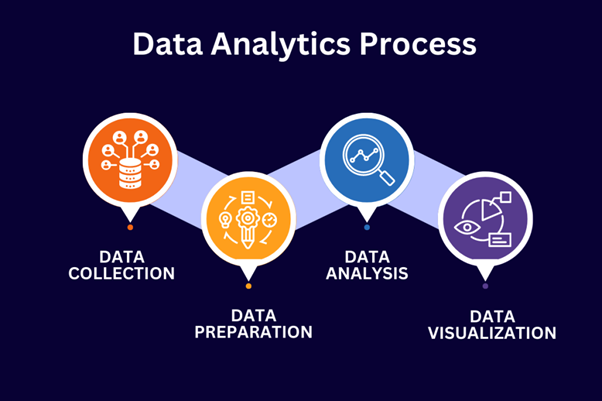
Data analytics is the process of studying and making sense of data to discover useful insights or patterns. This helps businesses and other groups improve their work and make better decisions. There are many types of jobs within data analytics. For example, some data analysts focus on solving problems in supply chains, while others look at customer data to help keep current customers and attract new ones. These are just a couple of examples—there are many more areas where data analytics can be used.

What Is a Data Analytics Degree Program?
There are different types of degree programs in data analytics. Some schools offer full programs in data analytics, while others offer degrees in areas like business or computer science that let students focus or specialize in data analytics. These programs are built to help students learn the skills and methods needed to prepare for a career in this field.

Comparing Data Analytics Degree Programs and Concentrations

Full Data Analytics Degree Programs
These programs focus on teaching both technical and communication skills used in collecting and understanding data. Students usually take courses in areas like data mining, managing data, predicting outcomes, and creating charts or visuals. If you’re working toward a bachelor’s degree, you’ll also take general education classes. Graduate programs, like a master’s or doctorate in data analytics, often do not include general education but may require a final project or thesis.

Degree Programs with a Focus in Data Analytics or Data Science
Some business degree programs let students choose a focus in data analytics. These programs include general education and business-related classes, along with specific courses that deal with data analytics. This path might work well for someone who wants to improve their overall business skills while also learning how data can affect decision-making.

Computer science programs may offer a concentration in data science or data analytics, too. These programs also include general education courses, but the main focus is on programming, algorithms, and operating systems. Students in these programs may study topics like machine learning, large databases, and data analytics tools.

For those who already have a bachelor’s degree and want to keep studying data analytics, graduate programs can be a good next step. A master’s or doctoral degree in data analytics will continue to focus mainly on understanding and using data. Business or computer science graduate programs that offer a concentration in data analytics will include related courses to support the main area of study.

The Difference Between Data Analytics and Data Science
Even though they are similar, data analytics and data science are not the same. Here’s a look at how the roles of data analysts and data scientists compare.

What Does a Data Analyst Do?
Data analysts are professionals who study data to find trends and provide helpful information. Some job titles that involve this type of work include operations research analysts, management analysts, and computer or information research scientists. Data analysts use special tools to examine large sets of data. They find patterns, make predictions, and create visuals to share their findings. Their work helps business leaders make better decisions.

What Does a Data Scientist Do?
Data scientists take a wider approach. They create models and systems to gather and study data. They often begin by finding the best sources of data using different methods. They use a mix of tools like data mining, machine learning, and natural language processing to understand both structured and unstructured data. Like analysts, they use visuals to clearly share what they’ve learned with coworkers and clients.

CTU Programs with Data Analytics Focus Areas

Bachelor of Science in Business Administration – Data Analytics
This program allows students to learn how data can be used to make better business decisions. The main courses focus on basic business knowledge and skills, while the data analytics concentration adds classes that teach how to organize data, find useful insights, and use that information to help a business spot risks and opportunities.

Bachelor of Science in Computer Science – Data Science
This program focuses on the basics of data analysis and the use of programming to create software solutions. Students learn about different software design methods and explore various skills and techniques that are important in developing computer software.

Master of Business Administration – Data Analytics
This program is for students who want to study how data affects business performance and decision-making. The main MBA classes cover essential business topics. The data analytics concentration allows students to learn how to use data to make decisions that improve business strategies.

Doctor of Computer Science – Big Data Analytics
This advanced program is designed for experienced computer science professionals, researchers, and consultants. It encourages students to think strategically and contribute to their field. The Big Data Analytics concentration focuses on how to use tools and methods to analyze large sets of raw data and find meaningful insights.

Other Career Paths That Use Data Analysis

Database Architects
These professionals design and build databases that support systems and software. Before starting a design, they research what a company needs. Then they create models and write the code to build the database. They also check the system for mistakes or problems. Their work may include:

  • Working with other experts to understand what the business needs

  • Creating data models and database layouts

  • Building tools for computer modeling and simulations

  • Studying data to find patterns or trends

  • Reviewing customer or market data