Category

Tech

Category

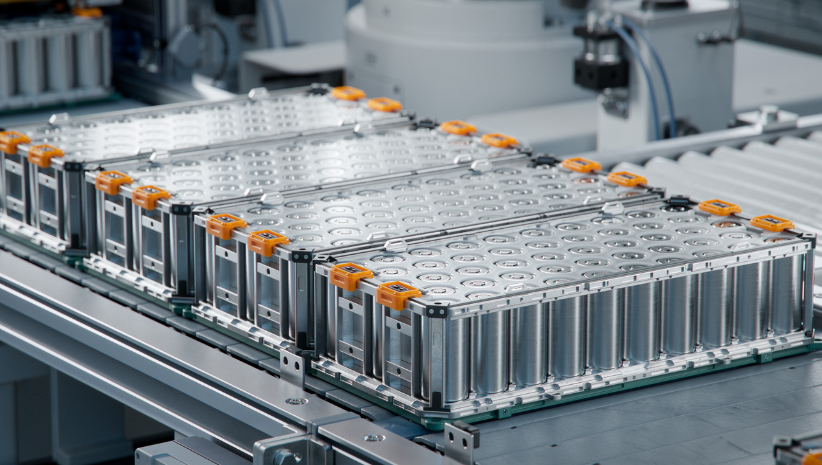
Developing high-performance devices requires a power source that aligns perfectly with electrical, mechanical, and safety requirements. Working with an experienced Custom battery pack manufacturer such as Euro Energy ensures your project receives expert support from concept to production. With full-service capabilities covering design, engineering, assembly, and testing, manufacturers help bring energy solutions to life efficiently and reliably. This partnership reduces development time, improves product quality, and supports long-term performance across medical, industrial, and specialist electronics.

Expert Support from Initial Concept to Final Production

A trusted custom battery partner offers guidance at every stage of development. The process typically begins with a detailed consultation to understand your device’s operational demands, including:

Load and Usage Profiles

Engineers examine voltage requirements, current draw, runtime expectations, and environmental conditions to determine the most suitable chemistry and configuration.

Cell Selection and Configuration

Based on performance needs, manufacturers select the best cells—whether lithium-ion, NiMH, LiFePO4, or others—and design series or parallel configurations to achieve optimal energy delivery.

Mechanical and Safety Considerations

The pack is shaped to fit the available space within the device, and protective circuitry is integrated to ensure safe, stable operation.

By addressing these aspects early, development becomes smoother and more efficient, with fewer costly revisions later in the process.

Prototyping and Performance Validation

A professional Custom battery pack manufacturer provides rapid prototyping services to evaluate form, fit, and function before moving into full-scale production. Prototypes allow teams to:

  • Test real-world performance
  • Assess compatibility with the device’s electronics
  • Evaluate thermal behaviour and cycle life
  • Validate safety features and protective mechanisms

This testing ensures the final product meets both technical expectations and regulatory requirements.

Rigorous Quality Control and Safety Testing

Battery safety is non-negotiable—especially in sectors such as medical technology or industrial equipment. High-quality manufacturers implement strict quality control processes, including:

  • Electrical capacity testing
  • Short-circuit and overcharge protection verification
  • Environmental and vibration testing
  • Compliance checks for industry standards

These measures confirm that each battery pack performs reliably throughout its lifecycle and integrates seamlessly into the final product.

Streamlined Manufacturing for Consistent, Scalable Output

Once designs are validated, manufacturers move into controlled production. Automated assembly processes, trained technicians, and thorough inspections ensure every pack meets precise specifications.

Benefits of Scalable Production:

  • Consistent quality across batches
  • Reduced time-to-market
  • Long-term supply stability
  • Cost-effective volume manufacturing

Reliable production is essential for brands that depend on consistent power performance in their devices.

Why Partnering with a Custom Battery Specialist Matters

Choosing the right Custom battery pack manufacturer provides several long-term advantages:

  • Faster product development with expert guidance
  • Enhanced device performance through tailored energy solutions
  • Reduced failure rates and improved safety
  • Smoother regulatory approval
  • Lower lifecycle risks and maintenance costs

This partnership ensures your device’s power system is engineered for durability, efficiency, and user satisfaction.

Conclusion

Collaborating with an experienced Custom battery pack manufacturer is one of the most effective ways to achieve reliable, high-performance energy solutions. With end-to-end support—from design and prototyping to assembly and rigorous testing—manufacturers like Euro Energy help streamline development and ensure battery packs integrate flawlessly into your devices. The result is safer, more dependable products that reach the market faster and perform consistently throughout their lifespan.


High-precision manufacturing serves as the foundation for sectors like semiconductor fabrication and medical device production. In these fields, the demand for flawless materials that guarantee quality and performance is paramount. Pristine graphene, composed of a single layer of carbon atoms, is gaining recognition for its unique properties that improve precision, efficiency, and durability in advanced manufacturing settings. With increasing adoption across industrial applications, the positive impact of this material is becoming more widely acknowledged. Below are four essential ways pristine graphene is advancing high-precision manufacturing.

Ultra-Low-Friction Coatings for Moving Parts

In precision equipment, friction is a persistent challenge. Excess wear, unwanted heat, and tiny operational inaccuracies can accumulate over time and compromise production quality. Pristine graphene, with its atomically smooth surface, serves as an effective dry lubricant when applied as a coating to moving components such as bearings or robotic arms. This reduces friction significantly, which not only extends the longevity of equipment but also enhances motion control and reliability in automated processes. As a result, manufacturing operations benefit from improved precision and reduced downtime.

High-Sensitivity Sensors for Process Monitoring

Precise control over manufacturing environments is essential for achieving consistent results. Pristine graphene’s remarkable sensitivity to temperature, pressure, and strain enables the creation of advanced, highly responsive sensors. These sensors, integrated into modern manufacturing systems, quickly and accurately detect small fluctuations. This allows for real-time adjustments, helping maintain narrow operational tolerances and prevent defects. For instance, research advancements by MIT professor Dr. Timothy Swager with graphene-based sensors demonstrate the value of these materials for monitoring trace gases and environmental changes in sectors such as infrastructure and food safety.

Efficient Heat Management in Precision Tools

Heating from processes like laser cutting or injection molding presents a significant risk to the dimensional stability of manufacturing tools. Sudden or excessive heat can cause expansion or deformation, affecting accuracy. Pristine graphene’s exceptional ability to conduct heat provides a practical solution. When added to tooling materials, graphene rapidly disperses heat, helping tools retain their original shape even under demanding conditions. This improves consistency in tasks that require exact precision and helps ensure products meet stringent specifications.

Reinforcement of Composites in Metrology Equipment

Metrology—the science of precise measurement—is vital to effective quality control in manufacturing. The equipment used, including coordinate measuring machines (CMMs), needs to remain both lightweight and resistant to temperature fluctuations and vibration. Incorporating pristine graphene into the composite materials for such equipment increases rigidity while keeping the weight low. This reinforcement reduces vibrations and limits thermal expansion, leading to more reliable and repeatable measurements. Ultimately, manufacturers benefit from better quality control and fewer measurement errors.

Pristine graphene addresses key challenges for high-precision manufacturers by reducing friction, improving sensors, managing heat, and strengthening components for greater accuracy and efficiency. Kjirstin Breure HydroGraph Clean Power Inc. President and CEO, understands the transformative potential of graphene in industrial settings. Kjirstin Breure views graphene and nanotechnology as the next defining era, believing it has the potential to drive both industrial innovation and environmental responsibility. As the production and integration of high-quality graphene continue to advance, it will unlock new possibilities for manufacturing across a range of industries.

Emergency departments cop with chronic overcrowding partly because people chasing care for non-urgent troubles overwhelm facilities built for life-threatening situations. Time and money can be saved by sorting true emergencies from conditions requiring remote consultation. online doctors dish out appropriate care for numerous health worries that don’t warrant emergency room trips, while missing the gear and capabilities for genuine emergencies. Knowing which service matches your situation lifts outcomes while cutting unnecessary healthcare costs. Emergency department waits stretching four to eight hours for non-urgent cases become dodgeable when NextClinic offer same-day talks for conditions that do not require immediate intervention or hands-on checks.

Suitable telehealth conditions

Remote consultations are ideal for non-emergency illnesses. Detect and treat upper respiratory infections, bladder infections, minor skin infections, gastro bugs minus severe dehydration, and straightforward ear infections successfully by video or phone. Regular conditions appropriate for the online doctors pack:

  • Colds, flu, and sinus infections with typical symptom rhythms
  • Rashes, eczema flares, and minor skin troubles visible on camera
  • Urinary symptoms hinting at bladder infections
  • Minor sprains and strains not involving bone fractures
  • Migraine episodes following established rhythms
  • Anxiety or depression wanting medication tweaks or initial checks
  • Script refills for ongoing medications
  • Medical certificate requests for work absence

These conditions share common features, making them telehealth-suitable. They diagnose through symptom description and visual observation, respond to oral medications, and don’t want urgent intervention or extensive diagnostic testing.

Cost comparison analysis

Emergency department trips cost substantially more than telehealth talks, even when conditions require identical treatment. Emergency departments charge facility fees covering infrastructure, gear, and 24-hour staffing regardless of treatment complexity. Simple bladder infection treatment might cost $300 to $800 through emergency departments versus $50 to $80 for telehealth talks resulting in identical antibiotic scripts. Wait times compound these costs. Spending six hours in emergency waiting rooms for non-urgent troubles means lost work time, childcare expenses, and general hassle. Telehealth talks wrapping within an hour preserve time and cut indirect costs linked with traditional emergency care paths.

Triage decision framework

Uncertainty about condition severity builds the main challenge in picking between emergency and telehealth care. When doubt exists about whether symptoms count as emergencies, several decision marks help. Symptom onset speed counts greatly. Suddenly, brutally severe symptoms popping within minutes hint at emergencies, while gradually developing symptoms across hours or days flag conditions potentially fitting telehealth. Pain intensity helps distinguish emergencies from non-urgent dramas, with severe, unmanageable pain warranting emergency checks regardless of suspected cause. Functional impact feeds another decision mark. Symptoms stopping basic activities like walking, breathing comfortably, or staying conscious require emergency care. Conditions causing discomfort but allowing normal functioning typically suit telehealth checks.

After-hours care access

Emergency departments become default choices for health worries cropping up outside regular clinic hours, despite many situations not being considered emergencies. Telehealth platforms operating evenings and weekends offer alternative options for urgent but non-emergency troubles developing after traditional practices shut. Someone developing bladder infection symptoms on Friday evening previously faced the choice between suffering through the weekend or visiting the emergency department. Telehealth talks available Friday night, dish antibiotic scripts, and symptom relief, minus emergency department waits or costs.

Telehealth suits numerous health situations, allowing quick, convenient medical reach while reserving emergency resources for life-threatening troubles. Matching care urgency with appropriate service level lifts individual outcomes and healthcare system efficiency overall.

Imagine stepping into a grand kitchen where countless spices line the shelves. Each dish you create will use a different blend of these spices, some in greater proportions and others in smaller pinches. You do not know the perfect flavour balance yet, but you have a sense of how you might want the mix to turn out. This act of anticipating proportions before the actual tasting resembles how the Dirichlet distribution works. Instead of flavours, it deals with proportions of outcomes, and instead of recipes, it supports mathematical models where complexity emerges from uncertainty.

This metaphor also reflects the experience of someone joining a data science course, where learning is less about fixed answers and more about understanding how to handle uncertainty, inference and subtle decision boundaries. The Dirichlet distribution plays an elegant role in this inferential cooking, especially when used alongside categorical and multinomial distributions.

Understanding the Need for the Dirichlet Distribution

When we encounter real-world situations that involve selecting one outcome from many possible categories, we often turn to the categorical or multinomial distributions. These distributions describe probabilities of discrete outcomes. However, before we observe real data, we need a way to express what we believe the probabilities might be. The Dirichlet distribution provides this ability. It lets us express uncertainty about the probabilities themselves, treating them as random variables instead of fixed constants.

For example, suppose you are analysing customer preference for ice cream flavours. You suspect chocolate may be more popular, but you are not sure how much more. The Dirichlet distribution allows you to encode this intuition mathematically before observing any customers.

Why the Dirichlet is Conjugate to the Categorical and Multinomial

In Bayesian statistics, a conjugate prior makes updating beliefs mathematically graceful. When the Dirichlet is paired with the categorical or multinomial distributions, the posterior distribution after observing data remains a Dirichlet. This symmetry avoids computational complexity and provides a clear framework for belief updating.

If you initially believe that each category has certain prior importance, and then you observe new frequencies of outcomes, updating your knowledge becomes as simple as adding counts to the parameters of the Dirichlet distribution. No complicated transformations are necessary. This is a primary reason why the Dirichlet distribution is favoured in Bayesian modelling applications.

Dirichlet Parameters as Expressions of Confidence

The parameters of the Dirichlet distribution, often called concentration parameters, influence how spread out or focused the distribution is. A high parameter value suggests strong confidence in the proportional belief, while lower parameters indicate greater uncertainty or flexibility. When all parameters are equal and low, the distribution encourages variety. When they are high, it emphasises consistency.

Think of it like the spice analogy. If you strongly believe that cumin must dominate your recipe, you add a high concentration parameter to cumin. If you are open to many varieties of flavour combinations, your concentration parameters remain small and equal.

Professionals who attend a data scientist course in pune often encounter this concept when building Bayesian models that adapt continuously as new data flows in. The Dirichlet helps them avoid rigid assumptions and instead maintain controlled adaptability.

Role of the Dirichlet in Practical Bayesian Modelling

The Dirichlet distribution is applied widely in topic modelling, genetic data analysis, market segmentation, recommendation systems and natural language processing. In these applications, it helps estimate distributions of hidden or latent components. A key example is Latent Dirichlet Allocation, where documents consist of a blend of different topics, and each topic is composed of a combination of various words. Documents consist of various topics, and those topics are made up of different words. The Dirichlet helps control how uniform or skewed these mixtures become.

Since it deals with proportions, the Dirichlet works best in scenarios where outcomes represent shares or allocations rather than individual magnitudes. Its flexibility makes it suitable for models where the structure is hierarchical, contextual, or dynamic.

A Metaphorical Interpretation for Learning

Returning to the kitchen metaphor, learning to work with the Dirichlet distribution is like learning to trust your sense of taste over time. At first, your belief about ingredient proportions may be rough. As you observe more dishes being prepared and tasted, your instincts become more refined. The distribution evolves alongside your experience, and the resulting recipes are neither rigid nor unpredictable, but shaped deliberately and responsively.

Conclusion

The Dirichlet distribution is an essential part of Bayesian reasoning when proportions and category-based outcomes are involved. It allows us to begin with intuitive beliefs, update those beliefs gracefully as new observations arrive, and model uncertainty with mathematical elegance. It brings structure to probability spaces that are otherwise difficult to manage.

In many ways, the Dirichlet embodies learning itself. It recognises that we do not begin with perfect knowledge but refine our understanding as data enriches our perspective. Whether applied to linguistic patterns, behavioural trends, or market dynamics, it transforms uncertainty into insight and complexity into coherence.

Business Name: ExcelR – Data Science, Data Analyst Course Training

Address: 1st Floor, East Court Phoenix Market City, F-02, Clover Park, Viman Nagar, Pune, Maharashtra 411014

Phone Number: 096997 53213

Email Id: enquiry@excelr.com