
Category

Tech

Category

Ask ten Singapore business owners what the Productivity Solutions Grant actually covers and most will mention accounting software or point-of-sale systems before they mention cybersecurity, even though security tools have been part of the eligible solution list for years. That gap in awareness is one reason many SMEs only start thinking about grant-supported security spending after a scare, a suspicious invoice, a locked-out account, a warning from their bank about unusual transfer activity, rather than as part of routine IT planning. VGC Technology built its cybersecurity grant package specifically to close that gap, packaging the categories of protection a typical small business needs into a single, pre-scoped offering rather than leaving owners to work out which combination of tools actually qualifies.

What a “Grant Package” Actually Bundles Together

A grant package, in practice, is a predefined set of tools and services that has already been mapped against the eligible categories a government scheme supports, so a client isn’t starting from a blank slate when deciding what to buy. Rather than presenting an owner with a menu of disconnected products, endpoint protection here, email filtering there, awareness training somewhere else, the package groups them as a coherent security baseline that addresses the most common ways small firms actually get compromised. This matters because SMEs rarely have someone on staff who can independently evaluate whether a given security stack is complete or has obvious gaps, and a pre-assembled package removes much of that guesswork.

Endpoint and Email Protection as the Starting Point

Most incidents affecting small Singapore businesses begin at one of two points, a compromised laptop or a malicious email that slips past basic filtering, which is why those two areas anchor the package. Endpoint protection watches for unusual activity on staff devices, including the personal laptops and phones that inevitably end up handling work email in a company too small to enforce strict device policies. Email security layers on top of what a standard Microsoft 365 mailbox already provides, catching the spoofed invoice and urgent-wire-transfer attempts that remain the most common way small firms lose money to fraud. Neither control alone is sufficient, but paired together they address the two entry points responsible for the bulk of real-world SME incidents.

Staff Awareness Is Part of the Package, Not an Afterthought

Technology alone rarely stops a determined phishing attempt, particularly one that targets a specific employee by name and references a real supplier or client. The package includes an awareness component precisely because the weakest point in most small businesses is a person clicking a link during a busy afternoon, not a misconfigured firewall. Short, periodic training sessions and simulated phishing tests tend to reduce that risk more cost-effectively than additional software would, and including this element inside the grant-eligible scope means a business doesn’t have to fund staff training as a separate, unbudgeted line item.

How Pre-Approval Changes the Application Timeline

One of the more tedious parts of applying for government co-funding is establishing that a proposed solution actually qualifies, a step that can stretch out over several rounds of clarification if the vendor hasn’t done the groundwork beforehand. Because VGC Technology’s PSG cybersecurity grant package is built around pre-approved solution categories, much of that verification work is already done before an application ever gets submitted, which tends to shorten the back-and-forth considerably. An owner still needs to complete the standard application steps and provide the required company information, but the uncertainty over whether the underlying technology qualifies is largely removed from the process.

Matching the Package to What a Small Business Already Has

No two SMEs arrive at this conversation with the same starting point, some already run basic antivirus and have never touched email security, others have decent technical hygiene but no formal staff training program. The package is built to be layered onto an existing Microsoft 365 environment rather than requiring a business to discard tools it has already paid for, which keeps both the cost and the disruption manageable. A short assessment at the outset typically identifies which components a business genuinely needs versus which protections are already adequately covered, so the final scope reflects the client’s actual gaps rather than a one-size-fits-all bundle.

Common Gaps the Package Is Designed to Close

Talking to enough small businesses reveals a fairly consistent pattern in what’s missing, not a total absence of security but a handful of specific blind spots repeated across otherwise unrelated companies. A retail chain might have decent antivirus on its point-of-sale terminals but no real email filtering protecting the back office, while a professional services firm might have solid email hygiene but no formal process for revoking access when a contractor’s engagement ends. The package is deliberately built around these recurring gaps rather than a theoretical worst-case scenario, because addressing the patterns that actually show up across real SME environments tends to produce more practical protection than chasing every conceivable threat a larger enterprise might worry about.

Who Tends to Qualify

Eligibility for grant-supported cybersecurity spending generally follows the broader criteria set for the scheme itself, factors like company registration, local shareholding, and business size rather than anything specific to the security category. Firms that have never applied for a government grant before are often surprised at how procedural the qualification check actually is, and a provider that has been through the process repeatedly can usually confirm within a short conversation whether a business is likely to be approved. That early clarity saves owners from investing time drafting a proposal only to discover partway through that basic eligibility requirements were never met.
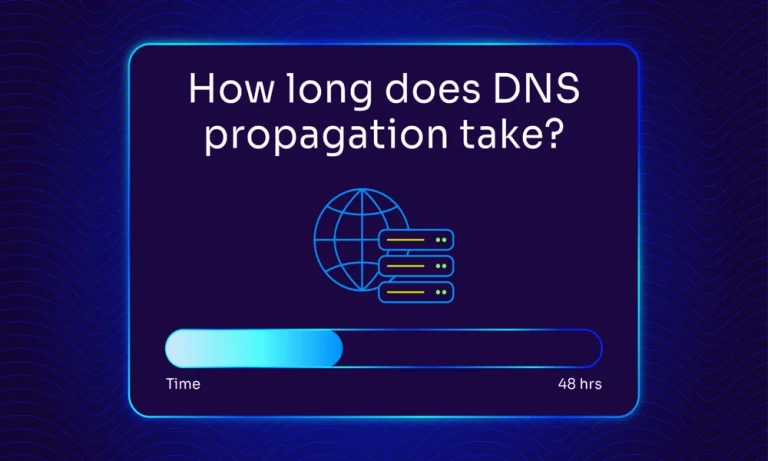

A website address can appear normal in one place while showing older details somewhere else. Office workers, store owners, developers, and remote teams sometimes notice these mixed results after changing domain settings. During routine maintenance, a dns propagation checker becomes useful for viewing DNS records from resolvers across different regions instead of depending on a single network response. Small observations from different locations usually reveal that updates rarely appear everywhere at exactly the same moment.

Why The TTL Clock Matters

A longer TTL keeps existing records available for extended periods, while shorter values encourage quicker refresh requests.Network administrators usually consider TTL before changing important records. Careful timing reduces unexpected surprises when services move between servers or addresses. Even after changes finish successfully, cached responses may still appear until the stored period naturally expires.

Situation What Appears Common Observation
New address added Mixed resolver replies Some regions refresh sooner
Record unchanged Same response everywhere Stable cached information
TTL still active Previous address visible Cache remains available
Cache expires Updated record appears Resolver requests fresh answer
Worldwide refresh Consistent responses Similar results across regions

Cache Waiting Can Feel Uneven

Cache expiry rarely follows identical timing everywhere. Internet providers maintain their own resolver systems, each respecting stored records until the permitted period finishes. During busy business hours, different offices sometimes notice mixed website behaviour even though the authoritative records have already changed.

A customer may report successful access while another location continues opening an older destination. These situations usually reflect normal cache timing rather than a fault. Quiet patience often becomes part of the process while networks gradually refresh stored answers.

Everyday Moments Behind Record Changes

Website maintenance often happens without public attention. Behind business operations, small domain adjustments support email delivery, website migration, security improvements, and server replacements. Staff members may continue answering calls while technical teams monitor resolver responses across several countries.

Unexpected differences occasionally appear between mobile connections, office broadband, and public internet services. Comparing several resolver locations paints a more complete picture than checking only nearby results. Steady observation usually replaces unnecessary concern because gradual updates remain part of normal DNS behaviour.

Watching Records Around the World

Looking at DNS records from many global resolvers creates a broader view of ongoing updates. A domain may return one address across Europe while another region still displays previous information. Such situations happen regularly after modifying important records.

Midway through routine checks, a dns propagation checker can compare resolver responses from many countries without relying on one internet connection alone. Small differences become easier to notice because every resolver follows its own refresh schedule. Conversations between technical teams usually become shorter once everyone reviews the same worldwide results together.

FAQ’s

  1. Why do DNS updates appear at different times?

Resolvers keep cached records until their TTL expires, so updates become visible gradually.

  1. Why compare results from several locations?

Different global resolvers refresh records independently, making worldwide comparisons more reliable than checking only one network.

The corporate world is in the middle of a massive technological shift, and at the center of it is Generative AI. For large business owners, the promise of GenAI is massive: automated operations, predictive customer experiences, and rapid product innovation. However, there is a stark difference between running a successful pilot project and deploying generative models safely at an enterprise scale.

The harsh reality is that AI models are only as good as the infrastructure supporting them. If your foundational systems are outdated, pouring advanced AI into them is like putting rocket fuel into a broken engine. Before investing heavily in licensing and algorithmic models, look for these seven signs that your current enterprise architecture isn’t ready for Generative AI.

Massive Data Silos Across Business Units

If your regional offices, marketing departments, and supply chain teams operate on separate, isolated legacy systems, you are not ready for GenAI. Large language models (LLMs) require cross-functional context to deliver deep enterprise value. When data is trapped in distinct organizational silos, your AI will generate incomplete, fragmented, or wildly inaccurate outputs because it lacks a unified view of your operations.

Frequent Data Quality and Lineage Issues

Generative AI suffers from a well-known vulnerability: “hallucinations.” If your enterprise regularly struggles with duplicate records, missing customer data, or conflicting financial numbers, GenAI will amplify these inaccuracies exponentially. Scale requires absolute confidence in your source material. If your engineers cannot trace exactly where a data point originated or verify its accuracy, deploying a generative model will introduce massive operational and reputational risk.

High Latency and Sluggish Data Pipelines

GenAI applications require rapid data ingestion and orchestration. If your current business infrastructure relies heavily on overnight batch processing or slow, manual pipeline fixes, it will bottle-neck your AI initiatives. Real-time customer service bots or dynamic market analysis tools require immediate data availability. Slow data streams force advanced models to idle, destroying the efficiency gains you bought them for.

Proprietary Code is Locked in Legacy Formats

Many large-scale operations still run critical business logic on rigid, legacy programming environments. If your core analytics, proprietary algorithms, or data processing steps are locked in closed-source languages from decades ago, your modern open-source AI tools cannot easily interact with them. Modern AI thrives in open ecosystems like Python or R. If your underlying codebase lacks modularity and openness, integrating AI becomes an expensive, uphill engineering battle.

Absence of a Centralized Cloud and Storage Strategy

Running generative models on an enterprise scale requires massive, elastic computing power and storage. Trying to sustain these workloads entirely on traditional, on-premise servers is financially and operationally unsustainable. If your business lacks a mature, hybrid, or multi-cloud roadmap, your infrastructure will buckle under the sheer computational weight of fine-tuning and running large models.

Rigid Governance That Chokes Engineering Velocity

True enterprise AI requires strict compliance frameworks, security access controls, and transparent auditing mechanisms. If your organization’s data governance strategy consists entirely of locking down all data to avoid risks, your data teams cannot build. Conversely, if you have no governance, you risk feeding sensitive corporate IP into public models. Your architecture must support dynamic governance-knowing exactly who has access to what data, and how it is being used by the AI, without grinding development to a halt.

Business Goals Are Divorced From Technical Reality

The final sign is strategic rather than purely technical. If leadership is chasing GenAI simply because it is a buzzword, without a roadmap to update the core architecture, the project will fail. You cannot achieve transformative automation on top of a fragile framework. True digital transformation requires a holistic approach to data modernization for business, ensuring the underlying pipelines, storage, and architectures are engineered to support modern workloads before the AI layers are introduced.

Generative AI is a generational business opportunity, but it demands an architectural foundation built for the modern era. If your enterprise shows even two or three of these signs, the priority should shift away from buying superficial AI applications and toward modernizing your data stack.

By building unified architectures, automating pipelines, and adopting open-source compatibility, you transform your company’s data from a passive historical archive into a living, scalable asset that is truly ready to power the future of artificial intelligence.

Building a meaningful presence on X in 2026 is a fundamentally different challenge than it was two or three years ago. The platform’s API restrictions introduced in the past year changed the rules for third-party tools significantly, eliminating a large number of lightweight automation products while creating space for more sophisticated, AI-native solutions designed to work within the new constraints. For creators, founders, marketers, and businesses who rely on X as a growth channel, understanding which tools still work – and how to use them effectively – has become an essential part of any serious content strategy.

This guide covers the most effective categories of X growth tools currently available, the engagement strategies that produce real follower growth in the current environment, and how AI-powered reply automation has emerged as one of the most impactful developments in the X growth toolkit.

Why Organic Growth on X Has Become Harder – and More Valuable

The combination of increased competition, algorithm changes, and API restrictions has made genuine organic growth on X more difficult to achieve through the shortcuts that worked in earlier years. Mass following, automated liking, and generic comment bots that once could generate surface-level engagement metrics are largely ineffective now – and increasingly likely to result in account restrictions.

What has not changed is the fundamental dynamic that drives real X growth: consistent, relevant, high-quality engagement with the right conversations in your niche. Accounts that appear in the right discussions, add genuine value to trending threads, and maintain a consistent voice over time continue to grow steadily regardless of algorithm shifts. The question for most people is how to do this at scale without spending six hours a day on the platform.

The Core Categories of X Twitter Growth Tools

Effective X growth tools in 2026 fall into several distinct categories, each addressing a different part of the growth puzzle.

Analytics and audience intelligence tools help creators understand which content performs, when their audience is most active, and what topics drive engagement. Without this data, posting is largely guesswork. Knowing that a particular type of thread consistently outperforms standalone posts, or that posting between certain hours triples reach, allows creators to make genuinely informed decisions rather than following generic advice.

Scheduling and content planning tools allow creators to maintain a consistent posting cadence without being tied to the platform throughout the day. Consistent posting is one of the most reliable predictors of account growth – the algorithm rewards accounts that post regularly, and audiences engage more reliably with creators they see frequently. Scheduling removes the friction that causes most people to post inconsistently.

The third and increasingly important category is reply automation and engagement tools – the area that has seen the most significant innovation since the API restriction changes came into effect.

X Reply Automation: The Most Underused Growth Lever

Replying to relevant conversations is one of the highest-leverage activities available to anyone trying to grow on X. When you add genuine value to a thread that is already gaining traction, you expose your account to the audiences of the original poster and everyone else engaging with that thread. A well-crafted reply on a high-visibility tweet can drive more profile visits and follows in a single day than weeks of regular posting.

The challenge is that finding the right conversations, reading the context, and crafting a reply that sounds natural and adds real value is time-consuming when done manually. At the volume needed to see consistent results, it becomes a near full-time activity – which is precisely why most people do it inconsistently or not at all.

This is the problem that AI-powered reply tools are now solving in a meaningfully different way than earlier automation approaches. Rather than posting generic responses to any tweet containing a particular keyword, modern tools use language models to understand context, match the account’s voice, and generate replies that read as natural contributions to a conversation. Fireply automates X (Twitter) replies in your own voice – it finds relevant conversations in your niche and responds automatically. This approach works within the constraints of the current X API while delivering the kind of engagement that drives real account growth.

What to Look for in Twitter Automation Tools

Not all X automation tools are equally effective or equally safe to use in the current environment. The API restrictions introduced in 2026 created a clear dividing line between tools built on legitimate, approved API access and those relying on workarounds that carry account risk.

When evaluating twitter automation tools, the first question is whether the tool operates through X’s official API or through unofficial methods. Official API access means the tool’s activity is visible to X’s systems in a way that complies with platform terms – unofficial workarounds may appear to work initially but carry significant account risk, including permanent suspension.

The second consideration is how the tool handles voice and context. Generic automation that produces obviously templated replies can actually damage an account’s reputation – other users notice when replies feel robotic or disconnected from the conversation. Tools that use language models to match your existing voice and respond to the actual content of a thread are significantly more effective and significantly less likely to create a negative impression.

Pricing and trial structures are also worth examining carefully. The best twitter AI tools offer some form of free trial or low-commitment entry point that lets you evaluate results before investing significantly. Tools like Fireply offer 40 free replies without requiring a card, which gives a genuine opportunity to see how the tool performs in practice before committing to a paid plan starting from $69 per month.

Building a Sustainable X Growth Strategy

Tools are only as effective as the strategy they support. The accounts that grow most consistently on X in 2026 combine several elements: a clear niche focus that makes the account’s value proposition obvious to potential followers; consistent original content that reflects genuine expertise or perspective; and active engagement in relevant conversations that extends the account’s reach beyond its existing audience.

The best twitter tools support and amplify each of these elements rather than replacing any of them. Analytics tools inform content decisions. Scheduling tools ensure consistency. Reply automation tools extend reach into relevant conversations at a scale that would not be manually sustainable.

For most creators and businesses, the biggest practical gain comes from combining good original content with systematic engagement in the conversations their target audience is already having. X Twitter growth tools like reply automation remove the execution bottleneck that prevents most people from doing this consistently – which is ultimately what separates accounts that grow steadily from those that plateau.

Getting Started With X Growth Tools in 2026

For anyone starting fresh or looking to accelerate an existing presence on X, the practical approach is to start with clarity on your niche and audience before adding tools to the mix. Knowing exactly who you are trying to reach and what kind of conversations they are participating in is what allows any tool to be used effectively.

From there, building in a consistent posting rhythm – even a modest cadence of three to five posts per week – establishes the baseline that everything else builds on. Adding reply automation once that baseline is in place allows you to extend your reach systematically into conversations your audience is already engaged in, compounding the growth that organic posting alone produces.

The X growth tools landscape continues to evolve, but the underlying principles remain consistent: genuine value, consistent presence, and strategic engagement with the right conversations are what drive sustainable growth on the platform – and the best tools are simply the ones that help you do all three more effectively.

✅ Anchor: ‘Fireply’ → fireply.ai | 1 DoFollow Permanent | 1,000+ words | Tech/SaaS niche